How to Start an RPG: Choosing Difficulty, Class and Your First Build
Practical advice for the first hours of any RPG: choosing difficulty, picking a class, reading character creation, saving smart and when to respec.
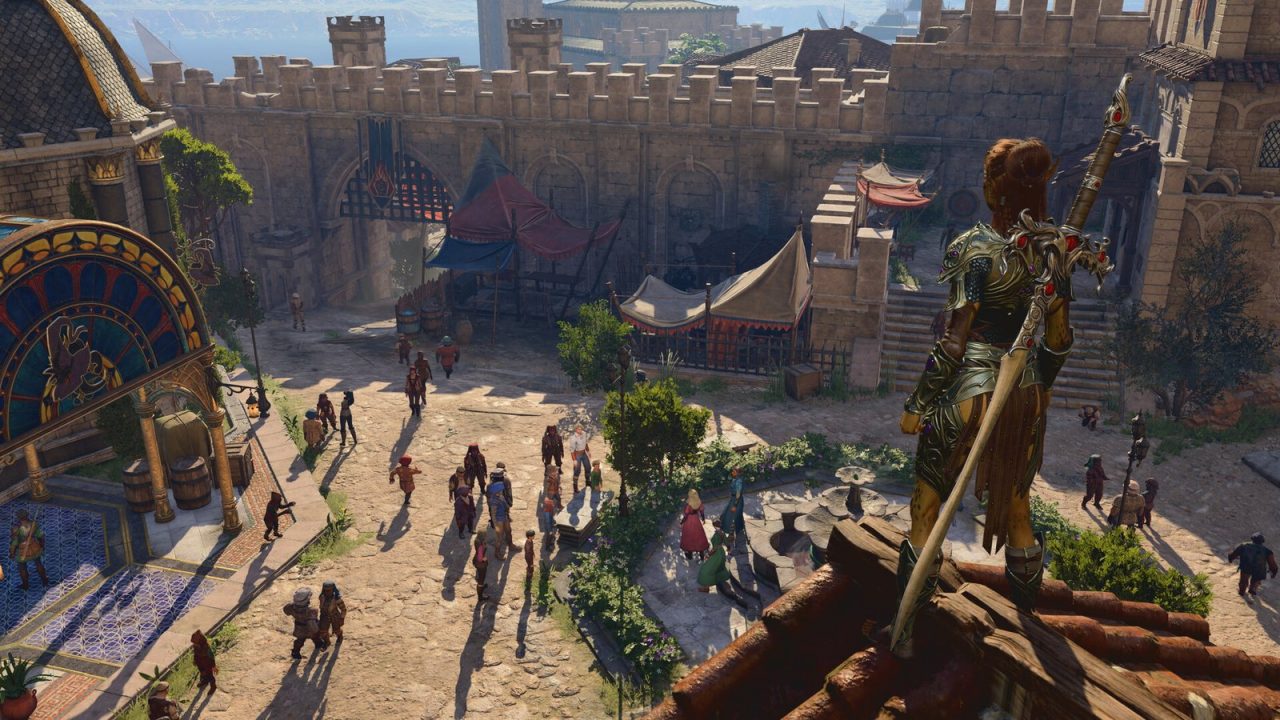
The first hour of a role-playing game asks you to make a surprising number of decisions before you have seen any of the game. Which difficulty? Which class? Where do these attribute points go? Is this choice permanent? It is easy to freeze, restart three times, or rush through and regret it twenty hours later. This guide offers practical, general advice for getting started in almost any RPG, with examples from well-known games.
Step 1: Choose a Difficulty Honestly
Difficulty settings exist to match the game to the player, not to rank players. A few principles help:
- “Normal” is usually the designers’ intended balance. If you have played similar games before, it is a sensible default.
- If you are new to the subgenre, consider one step lower. Turn-based tactics, rules-heavy CRPGs and action RPGs each demand different skills. Learning a new style on a gentler setting is reasonable, and you can usually raise it later.
- Check whether difficulty can be changed mid-game. Many modern RPGs let you adjust it at any time; some lock it at the start or lock certain modes. Read the description before committing.
- Look at what the setting actually changes. Some modes only scale enemy damage; others change rules, such as permanent death for party members or limited saving.
- Story-focused modes are legitimate. Several modern games offer them. Final Fantasy XVI (2023), for example, has a Story mode that provides accessories to simplify combat.
Some games have no difficulty settings at all, notably FromSoftware’s soulslikes. In those, difficulty is adjusted through play: summoning help, leveling in easier areas, choosing a defensive build or exploring elsewhere and returning later.
Tactical RPGs often offer a separate rules toggle. In Fire Emblem: Three Houses (2019), Classic mode makes fallen units permanently lost, while Casual mode revives them after each battle. If permanent loss would make you restart constantly, Casual is the better learning experience.
Step 2: Pick a Class or Archetype
Most RPG classes fall into four broad archetypes. Names vary, but the roles are consistent:
| Archetype | Typical names | Playstyle | Good for beginners? |
|---|---|---|---|
| Warrior | Fighter, Knight, Barbarian, Paladin | High health and armor, close-range combat | Usually the most forgiving |
| Rogue | Thief, Ranger, Assassin, Archer | Speed, precision, stealth, ranged or critical damage | Rewarding but less forgiving of mistakes |
| Mage | Wizard, Sorcerer, Black Mage | Powerful spells, low defense, resource management | Strong but fragile early on |
| Hybrid | Spellblade, Battlemage, Paladin, Warlock | Mixes weapons and magic or support | Flexible, but can be spread thin |
A good rule: pick the archetype that matches how you want to play, then lean toward durability. Warriors and heavily armored hybrids give you more room for error while you learn the game’s systems. Mages often become extremely powerful later but can feel fragile in the opening hours.
In party-based RPGs, your main character’s class matters less, because companions cover other roles. In single-character action RPGs, it matters more. And some games, such as The Elder Scrolls V: Skyrim, have no classes at all: you improve whatever skills you use, so your “class” emerges from how you play.
Step 3: Read Character Creation Carefully
Character creation can look like homework, but a few minutes of reading saves hours. Look for:
- Tooltips on every attribute. Find out what each stat actually does in this game. Our guide to RPG character stats covers the common ones.
- Starting equipment. In many games, the main practical difference between starting classes is their gear and spells.
- Permanent vs. temporary choices. Race, background and appearance may be fixed; stat points may or may not be refundable later.
- Effects outside combat. In CRPGs, attributes like Intelligence or Charisma can unlock dialogue options, quests and companions.
- Recommended choices. Many games mark beginner-friendly classes or suggest stat allocations. These recommendations are there for a reason.
In soulslikes, the starting class mostly decides your initial stat spread and gear. Because every later level-up lets you raise any attribute, a “wrong” starting class rarely ruins a run.
In Party Games: Build a Balanced Group
In party-based RPGs, the group matters more than any single character. A reliable early party usually covers four functions:
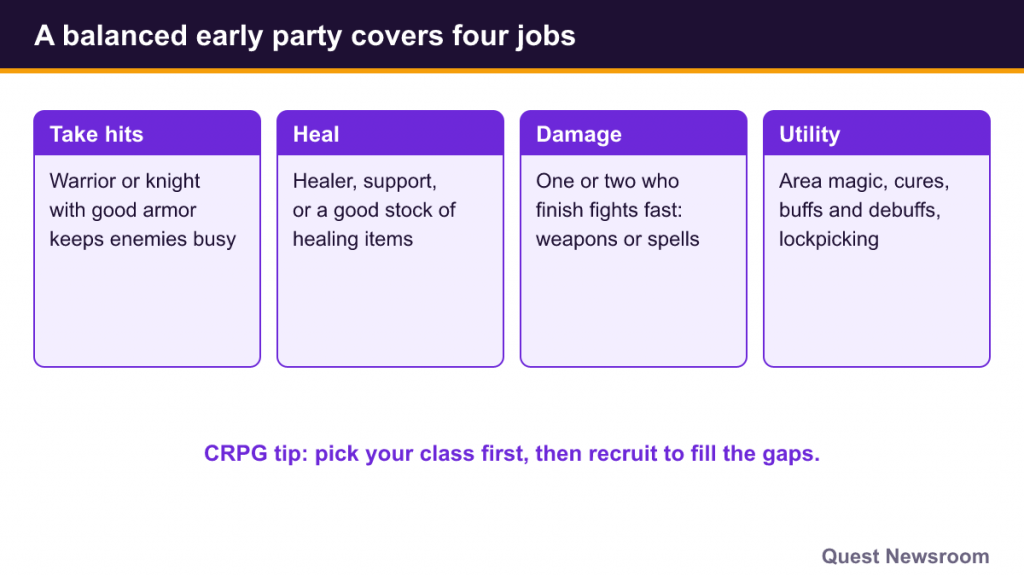
- Someone to take hits. A warrior or knight with good armor keeps enemies busy.
- Someone to heal. A healer or support character, or at minimum a good stock of healing items, prevents slow attrition.
- Reliable damage. One or two characters who can finish fights quickly, whether with weapons or spells.
- Utility. Area-of-effect magic, status cures, buffs and debuffs, or skills such as lockpicking and persuasion in CRPGs.
In JRPGs, the story often hands you a well-balanced group, and your decisions are about who to bring into the active lineup. In CRPGs, recruitable companions fill gaps around your main character, so choose your own class first and then recruit to cover what is missing. If a companion’s personality appeals to you more than their role, it is usually fine to bring them anyway; modern games are rarely strict enough to punish an unconventional party on normal difficulty.
Also check whether benched characters gain experience. In some games they do, in others they fall behind, which matters if you later need them for a mandatory section.
Step 4: Build Good Saving Habits
Saving habits prevent most beginner disasters:
- Use multiple save slots. Rotate between two or three manual saves so a bad decision does not overwrite your only file.
- Save before major decisions and boss fights. Branching quests and permanent consequences make this especially important in CRPGs.
- Do not rely only on autosaves. Some games autosave rarely or at awkward moments.
- Know the save rules. Some JRPGs restrict saving to specific points; some action RPGs save automatically and allow no manual saves at all. Learn how your game handles it in the first hour.
A word of caution about “save scumming”, reloading until you get a perfect outcome. It is a valid tool, but doing it for every minor setback can drain the tension and fun from a game designed around consequences.
Step 5: Explore or Rush the Main Quest?
Most RPGs reward a balance. Early side quests often provide experience, money and equipment that make the main story smoother. They also teach you how the world works and frequently contain some of the best writing. On the other hand, trying to clear every marker before touching the main quest can burn you out.
- Follow the main quest until the game opens up. Early story missions often unlock essential systems such as fast travel, crafting or party members.
- Then mix side content in. Pick quests that interest you, not every one available.
- Watch for “point of no return” warnings. Many games tell you when a story event will lock away areas or quests.
- In open-world games, follow curiosity. Exploring is the point. If an area is too dangerous, leave and return later; Elden Ring (2022) is built around this idea.
If you are worried about grinding, read our explainer on how XP and leveling work; modern games are generally tuned so that a mix of story and side content keeps you at a comfortable level.
Step 6: Know When to Respec
A respec lets you reset and redistribute attribute or skill points. Many modern RPGs include one, sometimes immediately, sometimes after a story milestone, often for a price or a rare item. In Baldur’s Gate 3, a character in your camp can respec party members. In Elden Ring, respecs become available after a certain point in the story and require a consumable item.
Consider respeccing when:
- You are consistently struggling and your build clearly lacks damage or survivability.
- You have discovered a weapon, spell or playstyle you enjoy more.
- Your party lacks a role, such as healing, and you can adjust a character to fill it.
Avoid respeccing constantly in search of a perfect build. Learning to use what you have is often more effective than rebuilding.
Common First-Hours Mistakes
- Selling everything. Keep a few healing items and status cures; early money is tight, and running out mid-dungeon hurts.
- Ignoring equipment. New gear often matters more than a level-up. Check shops when you reach a new town.
- Skipping tutorials. They are usually short and explain mechanics the game will not repeat.
- Hoarding consumables forever. Potions and buffs are meant to be used. Using them in hard fights is often the intended solution.
- Not checking party composition. In party RPGs, balance damage, durability and support. Combat systems vary, so see our guide to RPG combat systems for how each style rewards different choices.
- Restarting endlessly. A few restarts while learning are normal, but most RPGs are forgiving enough that you can continue with a “flawed” character and still finish.
A Simple Starter Checklist
- Choose Normal, or one step lower if the subgenre is new to you.
- Pick a durable archetype that matches how you want to play.
- Read every attribute tooltip once.
- Create two or three rotating manual saves.
- Follow the main story until the game opens up, then mix in side quests.
- Check equipment at every new town or hub.
- Use your consumables when fights get hard.
- Respec only when something clearly is not working.
The most important thing is to keep playing. RPGs are designed to teach you over time, and the systems that look overwhelming at the character creation screen usually make sense a few hours in.