RPG Character Stats Explained: Strength, Dexterity, Intelligence and More
What STR, DEX, CON, INT, WIS, CHA and luck do in RPGs, how derived stats like HP and crit work, and how D&D, Fallout SPECIAL and Souls stats differ.
Character creation screens can be intimidating. A column of three-letter abbreviations, a pool of points and a warning that choices may be permanent: no wonder many players freeze. The good news is that most RPGs build on the same small set of ideas, inherited from tabletop gaming. Once you understand what the common attributes represent and how they feed into derived numbers like hit points and critical chance, almost any stat sheet becomes readable.
Primary Attributes vs. Derived Stats
RPG stats come in two layers.
- Primary attributes (also called ability scores or base stats) describe the character’s fundamental qualities: strength, agility, intellect and so on. You usually influence these directly, through character creation and level-ups.
- Derived stats are calculated from attributes, level and equipment: hit points, mana, attack power, defense, critical hit chance, carrying capacity, dodge rate and more.
When you raise strength, you are rarely buying “strength” for its own sake. You are buying the derived numbers it improves, such as melee damage or the ability to wield heavier weapons. Learning which attributes feed which derived stats is the key to building a character that works. It also connects to leveling: see our guide to experience points and leveling for how you earn the points to spend.
The D&D Six: Where It All Started
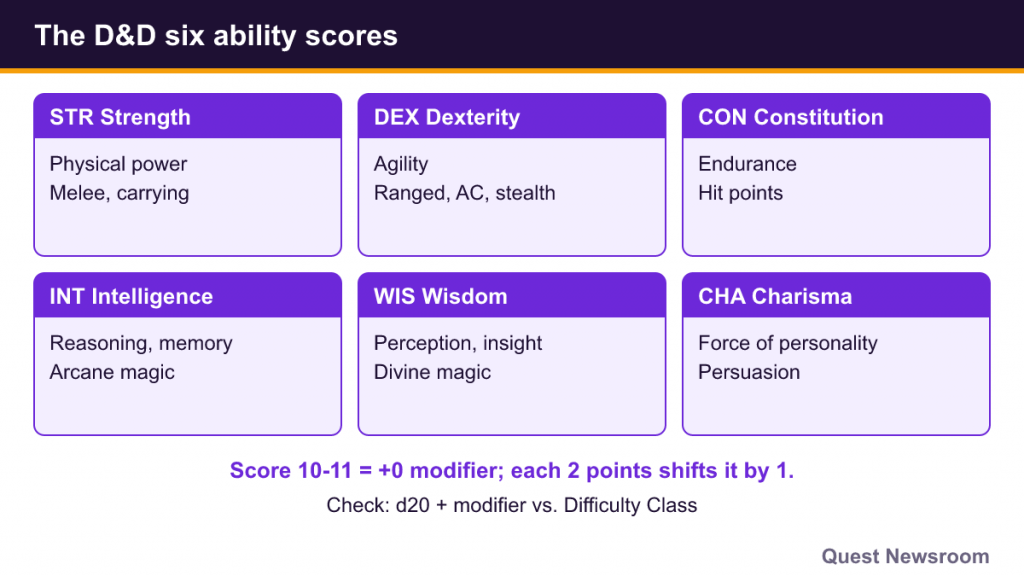
Dungeons & Dragons, first published in 1974, gave the genre its most influential stat set. In the fifth edition rules (released in 2014, with a backwards-compatible revision in 2024), every character has six ability scores:
| Ability | Abbreviation | What it measures | Typical game uses |
|---|---|---|---|
| Strength | STR | Physical power | Melee damage, carrying capacity, heavy weapons |
| Dexterity | DEX | Agility | Ranged and finesse attacks, armor class, stealth, initiative |
| Constitution | CON | Endurance | Hit points, resisting poison and fatigue |
| Intelligence | INT | Reasoning and memory | Arcane magic, knowledge checks |
| Wisdom | WIS | Perception and insight | Divine magic, awareness, willpower |
| Charisma | CHA | Force of personality | Persuasion, some magic classes, prices |
In D&D, each score produces a modifier. A score of 10 or 11 gives +0, and each two points above or below shifts the modifier by one. When your character attempts something uncertain, you roll a twenty-sided die (d20), add the relevant modifier and compare the total to a Difficulty Class. Depending on the armor worn, some or all of the Dexterity modifier is added to Armor Class.
Video games built directly on these rules, from Baldur’s Gate (1998) to Baldur’s Gate 3 (2023), expose the same six scores. Many other games use variations of them without the D&D branding.
The Common Attributes, One by One
Strength
Almost always tied to physical damage, especially with heavy weapons, and often to carrying capacity. Many games set strength requirements for large weapons and armor. Warriors and knights lean on it.
Dexterity or Agility
Usually governs accuracy, ranged attacks, light or “finesse” weapons, evasion and sometimes speed. In ATB-style systems, a speed or agility stat determines how often a character acts. Rogues, archers and duelists depend on it.
Constitution, Vitality or Vigor
The survival stat. It increases maximum HP and often resistance to poison or disease. Every build benefits from some investment, which is why many guides recommend raising it early.
Intelligence
Typically powers arcane or elemental magic and sometimes the size of your mana pool. In some western RPGs it also unlocks dialogue options or affects how many skill points you earn.
Wisdom, Spirit or Faith
Often tied to divine or healing magic, magical resistance or mana regeneration. Games that separate “arcane” and “divine” casters use this split to differentiate mages from clerics.
Charisma
Influences persuasion, prices and companion relationships in dialogue-heavy RPGs, and powers certain spellcasting classes in D&D-based games. In many JRPGs it does not exist at all, since dialogue is not stat-driven.
Luck
A wild card. Luck commonly nudges critical hit chance, item drop rates or the success of random effects. Its exact effect varies so much between games that it is worth reading the in-game description before investing.
Endurance and stamina
In action RPGs, a separate stat often governs the stamina bar that limits attacks, dodges and blocks. Running out of stamina at the wrong moment is a common cause of death in soulslikes.
Common Derived Stats
- HP (hit points): how much damage you can take. Usually tied to a constitution-type stat and level.
- MP, mana or FP: the resource spent on spells and skills.
- Attack power: weapon damage plus bonuses from attributes.
- Defense or armor class: reduces damage taken or makes you harder to hit.
- Critical hit chance and damage: the probability of a stronger hit and how much stronger it is. Often linked to dexterity or luck.
- Evasion and accuracy: the chances of dodging or landing attacks in stat-driven combat.
- Resistances: reduce the effect of elements or status ailments such as poison, sleep or bleeding.
- Equip load or carry weight: how much you can wear or carry before being slowed.
Fallout’s SPECIAL System
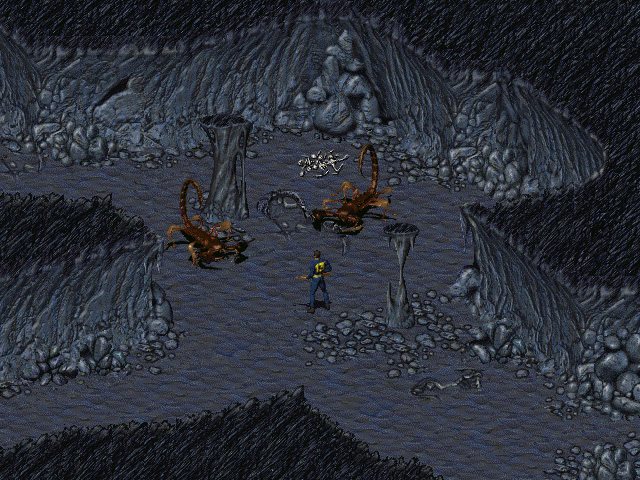
Fallout (1997) was originally built on the GURPS tabletop system. When Interplay dropped that license in March 1997 after Steve Jackson Games objected to the game’s violence, the team created its own system: SPECIAL, named for its seven attributes.
- Strength
- Perception
- Endurance
- Charisma
- Intelligence
- Agility
- Luck
In the original game, each attribute ranges from 1 to 10, with the starting total capped at 40, so you cannot be good at everything. The attributes then set starting values for 18 percentage-based skills, three of which can be “tagged” for a bonus. Agility affects the number of action points available in turn-based combat. Perks, earned every few levels, and optional traits with both positive and negative effects add further customization. SPECIAL remains the backbone of the series, and it is a good example of how a stat system can encourage role-playing: a low-Intelligence character in Fallout famously gets very different dialogue options.
Souls-Style Stats
FromSoftware’s action RPGs take a different approach. There are no classes locked to stats after creation; instead, every level-up raises one attribute of your choice, paid for with the same currency you spend in shops. In Elden Ring (2022), the eight attributes are:
- Vigor: maximum HP, plus resistance to some ailments and fire.
- Mind: FP, the resource for spells, incantations and summoning Spirit Ashes.
- Endurance: stamina and maximum equipment load.
- Strength: requirements and damage scaling for heavy weapons.
- Dexterity: requirements and scaling for advanced weapons, plus faster spell casting.
- Intelligence: requirements and power for sorceries, plus magic defense.
- Faith: requirements and power for incantations.
- Arcane: holy defense, death resistance and some specific spells and weapons.
The key idea is scaling: weapons list grades showing how much bonus damage they gain from certain attributes. A strength weapon gains little from intelligence, so builds naturally specialize. Each attribute can reach 99, and the leveling cost rises with each level, so players must decide what to prioritize. Many Souls players also talk about “soft caps”, points after which further investment yields less benefit. Exact values differ between games and have changed with updates, so check a current, game-specific source before planning around them.
Stats in JRPGs: Growth You Watch Rather Than Build
Many Japanese RPGs use stats differently. Instead of handing you points, they grow each character’s attributes automatically at level-up, according to that character’s role. The numbers still matter, but your decisions focus on equipment, party composition and abilities rather than raw allocation. Common JRPG stats include Attack, Defense, Magic (or Magic Attack), Magic Defense, Speed or Agility, and sometimes Luck or Spirit.
Speed deserves special attention in these games. In turn-based and Active Time Battle systems, it often decides who acts first or how quickly a character’s gauge fills, which can matter more than raw damage. A fast healer who acts before the enemy can prevent a wipe that a stronger but slower party member could not.
Some JRPGs let you nudge growth with items that permanently raise a stat, or with class and job systems that change growth rates. Final Fantasy XII: The Zodiac Age, for example, ties each character’s options to license boards linked to jobs.
Common Mistakes With Stats
- Ignoring the survival stat. A glass-cannon build can be fun, but very low HP makes mistakes fatal. New players usually benefit from extra health.
- Dumping a stat the game quietly relies on. In some RPGs, a low Intelligence or Charisma closes off dialogue solutions or companions. Read what each attribute does outside combat too.
- Chasing every weapon. In requirement-based systems, spreading points to use many different weapons leaves you mediocre with all of them.
- Forgetting equipment. Gear often contributes as much to derived stats as attributes do. An upgrade can be worth several levels.
- Copying an end-game build too early. Builds designed for maximum level can be awkward in the early hours, before key items or abilities are available.
How to Allocate Stats Wisely
- Pick a primary attribute. Choose the stat that drives your main damage source and raise it consistently.
- Invest in survivability. Some points in HP-related stats prevent frustrating deaths, whatever your build.
- Meet requirements, then specialize. In requirement-based systems, reach the minimum for your chosen weapon or spell first.
- Read descriptions. The same stat name can do different things in different games. Luck is the classic example.
- Avoid spreading too thin. A character with average values in everything is often weaker than one with a clear focus, especially in systems with scaling.
- Know whether you can respec. If the game lets you reallocate later, experiment freely.
For more context on rules-heavy games where stats also unlock dialogue, see our CRPG explainer. Whichever system you face, remember that stats exist to express a kind of character. Decide who you want to play first, and the numbers will follow.