The Witcher Games History: From Sapkowski’s Books to Wild Hunt
How a Polish fantasy saga became one of gaming's great RPG series: the three Witcher games, Wild Hunt's expansions, Gwent and The Witcher IV's status.
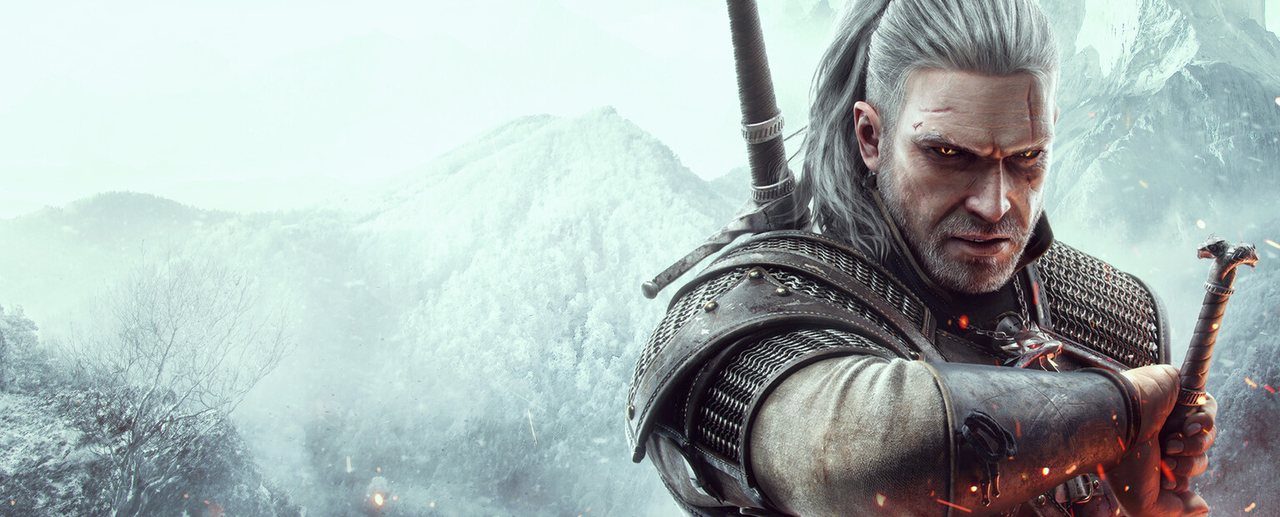
Few RPG series have climbed as steeply as The Witcher. The first game came from a Warsaw studio with no track record in making games, built on a licensed engine and based on books most western players had never heard of. Eight years later, The Witcher 3: Wild Hunt swept Game of the Year awards and became a reference point for open-world storytelling. This is the story of how CD Projekt Red got there, and where the series stands as of October 2026.
The Source: Andrzej Sapkowski’s Witcher Saga
Everything starts with Andrzej Sapkowski, a Polish writer who entered a short story called “The Witcher” in a competition run by the magazine Fantastyka in 1986. It placed third, but its hero, Geralt of Rivia, a mutated monster hunter for hire, caught on with readers.
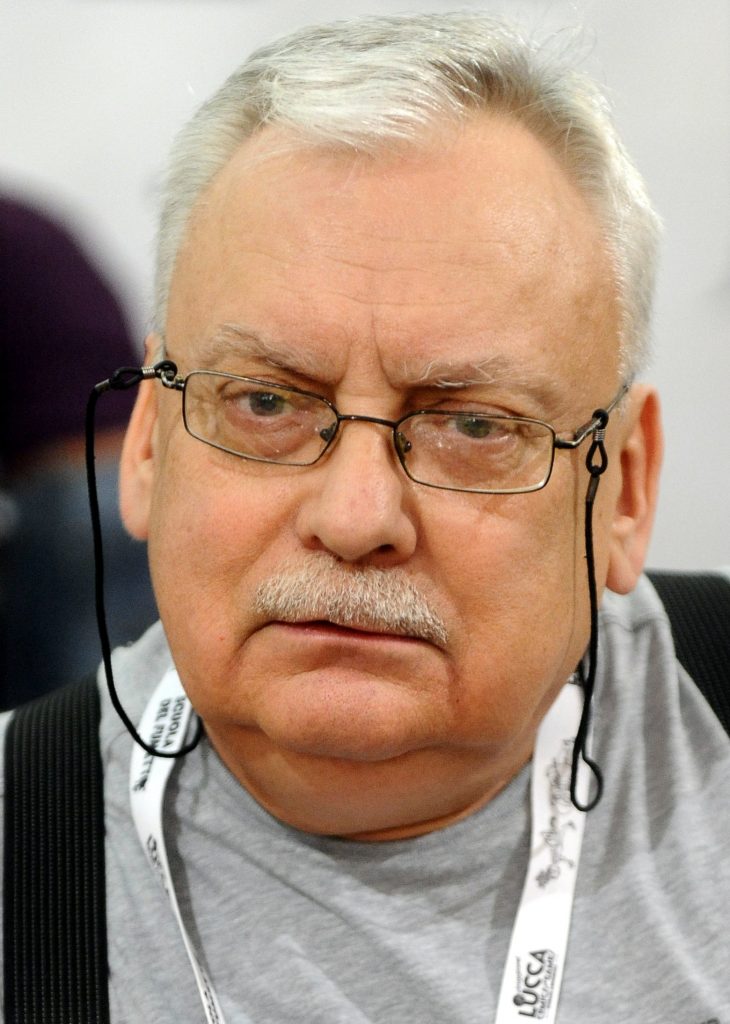
Sapkowski wrote more stories, collected in Sword of Destiny (1992) and The Last Wish (1993), and then a five-novel saga: Blood of Elves (1994), Time of Contempt (1995), Baptism of Fire (1996), The Tower of the Swallow (1997) and The Lady of the Lake (1999). The saga centers on Geralt, the sorceress Yennefer and Ciri, a young princess with dangerous powers whom Geralt takes under his protection. A standalone novel, Season of Storms, followed in 2013, and Crossroads of Ravens, about a young Geralt, was published in Poland in 2024.
What made the books distinctive, and what the games inherited, was their tone. Sapkowski’s world borrows from Slavic folklore and twists familiar fairy tales. Monsters are often less monstrous than the people who hire Geralt to kill them, politics are cynical, and the “lesser evil” is a recurring dilemma. Those moral gray areas would become the backbone of CD Projekt Red’s quest design.
The games are not adaptations of the novels. They are non-canonical sequels set after the saga’s ending, which let CD Projekt tell new stories while reusing characters fans of the books already knew.
The Witcher (2007): A Studio Learns Its Craft
CD Projekt began as a distributor, bringing western games into Poland, and it negotiated for the Witcher rights in 2003. The first game, simply called The Witcher, released for Windows on October 26, 2007. It ran on a modified version of BioWare’s Aurora Engine, the technology behind Neverwinter Nights.
The Witcher established the series’ core identity:
- A fixed protagonist. You play Geralt, not a custom character. An amnesia premise eased newcomers into a world they did not know.
- Delayed consequences. Choices often paid off hours later, so players could not easily reload to “fix” an outcome.
- Witcher craft. Alchemy, potions and preparation for specific monsters mattered, as did the two swords Geralt carries: steel for humans, silver for monsters.
- Stance-based combat. Fights used timed clicks and three combat styles, a system that was unusual and divisive.
The game was rough in places, especially in its translation and pacing, but it found an audience, and CD Projekt later released an Enhanced Edition that addressed many complaints. A console version, Rise of the White Wolf, was announced but canceled in 2009. In January 2026, CD Projekt’s leadership said the first game had sold 10 million copies over its lifetime.
The Witcher 2: Assassins of Kings (2011): Politics and Branching Paths
The Witcher 2: Assassins of Kings launched on Windows on May 17, 2011. This time CD Projekt Red used its own technology, REDengine, and the jump in visual quality was significant. An Enhanced Edition arrived on April 17, 2012, including the series’ first console release on Xbox 360.
The sequel narrowed its scope to tell a tighter political story. Geralt is framed for the murder of a king and has to clear his name amid a web of plots involving kings, sorceresses and the Scoia’tael, elven guerrillas fighting human rule.
Its most famous design choice comes at the end of Chapter 1. Players side with either Vernon Roche, a commander of Temerian special forces, or Iorveth, a Scoia’tael leader. That decision determines which version of Chapter 2 you play, with different locations, characters and quests. Many players never saw half of the game’s second act on their first playthrough, which became a selling point for replaying it.
Combat moved to a more action-oriented system with dodges, rolls and quick-cast signs. It was notoriously punishing in the opening hours, but it pointed toward the more fluid fighting of the third game. The Witcher 2 reached 15 million copies sold according to the January 2026 figures from CD Projekt.
The Witcher 3: Wild Hunt (2015): The Breakthrough
The Witcher 3: Wild Hunt released on May 19, 2015, for Windows, PlayStation 4 and Xbox One, built on REDengine 3. It concludes Geralt’s story arc in the games, following him across a huge open world in search of Ciri, who is being pursued by the spectral Wild Hunt.
What made it special
Wild Hunt was not the first open-world RPG, but it changed expectations about what side content could be. Instead of generic fetch quests, many optional contracts and side stories had their own twists, characters and moral dilemmas. The Bloody Baron questline in Velen, for example, is still cited as a benchmark for how much emotional weight a side story can carry.
The world was divided into large regions, including war-torn Velen, the city of Novigrad and the Skellige Isles, each with its own culture and look. Monster contracts asked players to investigate with Witcher Senses, research a creature’s weaknesses and prepare oils, potions and bombs before fighting. For a contrasting approach to open worlds, see our Elder Scrolls series history.
Awards and sales
Wild Hunt won Game of the Year at The Game Awards 2015, the Golden Joystick Awards that same year and the Game Developers Choice Awards. It has since become one of the best-selling games of all time: according to Wikipedia’s summary of CD Projekt’s reporting, Wild Hunt had passed 65 million units sold by May 2026.
Hearts of Stone and Blood and Wine
Wild Hunt received two expansions, both still regarded as among the best RPG add-ons ever made:
- Hearts of Stone (October 13, 2015) is a compact, story-focused expansion built around a deal with a mysterious immortal, Gaunter O’Dimm. Its villain and its heist mission are frequently singled out as highlights of the entire series.
- Blood and Wine (May 31, 2016) adds a whole new region, the sunny duchy of Toussaint, a vampire mystery and a proper send-off for Geralt, including a vineyard he can call home.
The two expansions were bundled with the base game in the Game of the Year Edition, later called the Complete Edition. Wild Hunt also came to Nintendo Switch on October 15, 2019, and a free next-generation update for PlayStation 5 and Xbox Series X|S, with ray tracing and quality-of-life changes, arrived on December 14, 2022.
Gwent: From Minigame to Spin-Off
One of Wild Hunt’s most popular features was a card game. Gwent, played in taverns across the Northern Kingdoms, had its own collectible cards, unique opponents and a quest line built around winning rare cards. Plenty of players spent more time chasing Gwent decks than chasing Ciri.
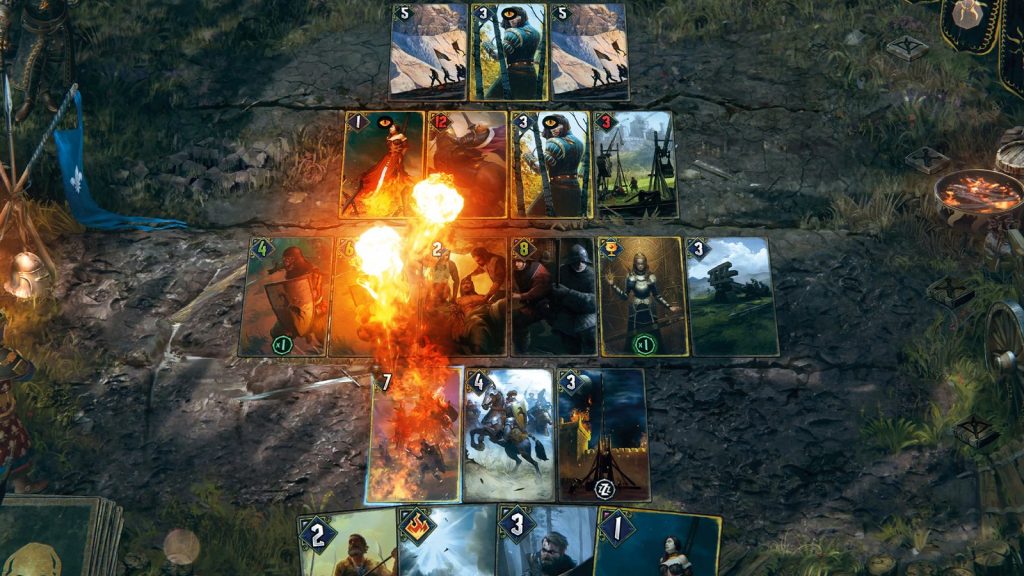
CD Projekt spun it off into a standalone free-to-play title, Gwent: The Witcher Card Game, released in 2018. The same year brought Thronebreaker: The Witcher Tales (October 2018), a single-player story campaign about Queen Meve of Lyria and Rivia that uses Gwent-style card battles in place of traditional combat. Thronebreaker received generally favorable reviews and is a good pick for fans who want more Witcher-world storytelling in a different format.
Wild Hunt’s Second Life in 2026
Wild Hunt has continued to receive major updates more than a decade after launch. CD Projekt Red announced The Witcher 3: Wild Hunt Remastered in August 2026, and the official Witcher site lists it as released on September 29, 2026, as a free upgrade for existing owners on PC and current-generation consoles. Follow-up patches were published in early October 2026.
The studio also announced a new expansion in May 2026, titled Songs of the Past, set in a new realm called Letten. As of October 2026, it has not yet been released.
The Witcher IV and Other Projects: Status as of October 2026
CD Projekt announced in March 2022 that a new Witcher saga was in development, codenamed Polaris. Key facts about The Witcher IV as of October 2026:
- Engine: it is being built in Unreal Engine 5 rather than CD Projekt’s own REDengine.
- Development stage: the studio said in November 2024 that the game had entered full-scale production.
- Protagonist: a cinematic reveal trailer at The Game Awards in December 2024 showed Ciri as the playable lead, with Geralt’s actor Doug Cockle returning in a role.
- Platforms: PC, PlayStation 5 and Xbox Series X|S have been named.
- Timing: CD Projekt said in 2025 that it would not release before 2027, and around Gamescom 2026 the company pointed to a 2028 window. No exact release date has been announced.
Separately, a remake of the first Witcher game was announced in October 2022. It is being rebuilt in Unreal Engine 5 by Fool’s Theory under CD Projekt Red’s creative supervision, and as of October 2026 it has no announced release date.
How the Series Changed RPGs
The Witcher trilogy’s influence goes beyond sales. It showed that a fixed protagonist with a defined personality could still support meaningful player choice, a middle ground between the blank-slate heroes of many western RPGs and the fully authored leads common in JRPGs. It made consequences feel organic by delaying them, and it raised the bar for side quests in open worlds. It also proved that a studio outside the traditional RPG centers in North America and Japan could produce a genre-defining game.
Sapkowski’s own relationship with the games was complicated: in 2018 he demanded additional compensation for the rights he had licensed years earlier. The dispute was settled with additional royalties in 2019, and the success of the Netflix series, which premiered in December 2019, brought a new wave of players to Wild Hunt.
Where to Start Today
Most new players start with The Witcher 3: Wild Hunt. It recaps enough of the backstory to stand on its own, and the Complete Edition or the new Remastered version includes both expansions. If you enjoy it, The Witcher 2 is worth going back to for its branching second act, while the first game rewards patient players interested in the full story. If you are new to the genre altogether, our list of the best RPGs for beginners suggests other approachable starting points.