In the bustling artistic landscape of early twentieth-century Saint Petersburg, a modest private studio became the unlikely crucible where the visual language of a new era was forged. The Zvantseva School, founded by Elizaveta Zvantseva in 1906, emerged as one of the most influential art institutions in pre-revolutionary Russia, nurturing talents who would go on to reshape the boundaries of modern art. Far from the rigid academic traditions of the Imperial Academy of Arts, this intimate educational space offered young artists the freedom to experiment, challenge conventions, and develop their unique creative voices during one of the most turbulent and transformative periods in Russian history.
Elizaveta Nikolaevna Zvantseva, herself a trained artist who had studied in Paris, understood that traditional academic instruction was failing to address the revolutionary changes sweeping through European art. After returning to Russia, she established her school with a vision that prioritized individual expression over technical conformity. The timing proved perfect: Russian society was undergoing profound changes following the 1905 Revolution, and young artists were hungry for new forms of expression that could capture the spirit of their rapidly transforming world. The school operated first in Saint Petersburg and later opened a branch in Moscow, attracting students from across the Russian Empire who sought alternatives to conventional art education.
Revolutionary Teaching Methods and Master Instructors
What truly distinguished the Zvantseva School was its roster of remarkable instructors who brought cutting-edge European artistic movements directly to Russian students. The school’s most celebrated teachers included Leon Bakst and Mstislav Dobuzhinsky, both prominent members of the Mir Iskusstva (World of Art) movement that sought to revitalize Russian visual culture through connections with Western European aesthetics. Bakst, who would later achieve international fame for his theatrical designs with Sergei Diaghilev’s Ballets Russes, brought his sophisticated understanding of color, line, and decorative composition to his teaching. His lessons on costume and stage design influenced an entire generation of artists who would transform not only painting but also theater, fashion, and graphic design.
Kuzma Petrov-Vodkin, another influential instructor at the school, introduced students to his unique theories of “spherical perspective” and his philosophical approach to composition that drew from both Byzantine icon painting and Italian Renaissance traditions. His teaching methodology emphasized understanding the underlying geometry of visual perception while maintaining emotional authenticity. Students were encouraged to study Old Masters while simultaneously exploring contemporary French Post-Impressionism and Fauvism. This synthesis of historical knowledge and modern experimentation created a fertile environment where tradition and innovation could coexist and inform each other.
Notable Alumni and Their Lasting Impact
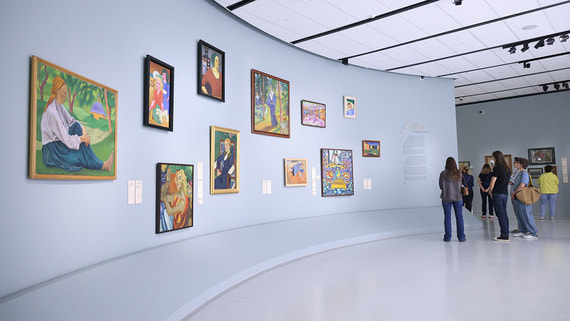
The Zvantseva School’s influence on twentieth-century art cannot be overstated when examining its remarkable roster of alumni. Marc Chagall studied there briefly in 1908-1909, absorbing influences that would later merge with his Hasidic Jewish heritage to create his distinctive dreamlike imagery. Elena Guro, poet and painter who became a key figure in Russian Cubo-Futurism, developed her artistic foundations at the school. Vera Ermolaeva, who would later work alongside Kazimir Malevich and contribute to Suprematist publications, also received her early training there. These artists carried forward the school’s emphasis on personal vision and experimental technique, spreading its influence throughout the avant-garde movements that would define early twentieth-century art.
The school also played a crucial role in establishing networks and communities that would prove essential to the development of Russian modernism. Students formed lasting friendships and professional relationships that transcended the classroom, creating informal support systems that sustained experimental artists during periods of political and economic uncertainty. Many alumni went on to participate in groundbreaking exhibitions, including the landmark shows organized by the Jack of Diamonds and Donkey’s Tail groups that scandalized conservative critics while electrifying younger audiences eager for artistic revolution.
Historical Context and Legacy
The Zvantseva School operated during an extraordinary period in Russian cultural history, sometimes called the Silver Age, when literature, music, and visual arts experienced unprecedented creative ferment. Private art schools like Zvantseva’s filled a crucial gap in the educational landscape, offering instruction that the official academies either could not or would not provide. While the Imperial Academy of Arts maintained its commitment to classical techniques and conservative aesthetics, private studios became laboratories where Impressionism, Post-Impressionism, Symbolism, and emerging abstract tendencies could be studied and practiced freely.
The school’s closure following the 1917 Revolution marked the end of an era, but its influence persisted in the work of its graduates and the educational philosophies they carried forward. Many Zvantseva alumni became teachers themselves, transmitting the school’s values of experimentation and individual expression to subsequent generations. The school’s legacy can be traced through the development of Soviet art education and, more broadly, through the global dissemination of Russian avant-garde principles that continue to influence contemporary art practice and pedagogy to this day.
Expert Opinion: The Zvantseva School represents a critical but often overlooked node in the network of institutions that enabled Russian modernism’s explosive development. Its significance lies not merely in its famous alumni but in its demonstration that artistic innovation requires educational spaces willing to embrace uncertainty and experimentation. As contemporary art education grapples with questions of tradition versus innovation, the Zvantseva model offers enduring lessons about the value of intimate, mentor-based instruction that prioritizes individual vision over institutional conformity.