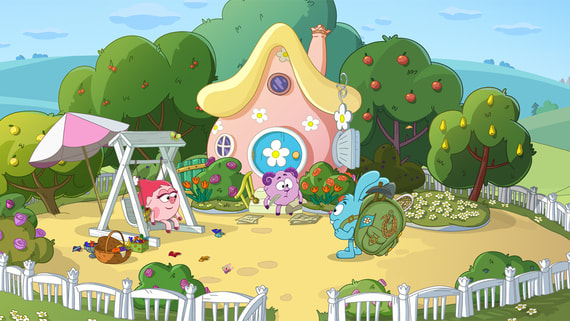
The beloved Russian animated franchise Smeshariki has taken a bold creative leap with its latest feature film, “Smeshariki Across the Universes,” which transforms its iconic spherical characters into human beings for the first time in the series’ two-decade history. This dramatic departure from the familiar format has generated significant buzz among fans and industry observers alike, as the film explores themes of identity, reality, and self-acceptance in a narrative structure that critics are comparing to “The Matrix” — but designed specifically for younger viewers.
A Revolutionary Transformation for an Iconic Franchise
The Smeshariki franchise, known internationally as Kikoriki or GoGoRiki in various markets, has been a cornerstone of Russian children’s entertainment since its debut in 2004. Created by the Saint Petersburg-based studio Riki Group, the series features a cast of round, colorful characters including the inventive pig Krosh, the philosophical bear Kopatych, and the romantic hedgehog Yozhik. For nearly twenty years, these characters have entertained children across more than sixty countries, spawning multiple television series, feature films, video games, and an extensive merchandise line. The decision to fundamentally alter the characters’ appearance represents perhaps the most significant creative risk in the franchise’s history.
According to early reviews and promotional materials, the film’s premise centers on the Smeshariki characters discovering that their familiar animated world may not be what it seems. Through a series of interdimensional adventures, they find themselves transformed into human beings — a change that reportedly causes significant existential distress for the characters. This narrative device allows the filmmakers to explore complex philosophical questions about identity and the nature of reality, themes typically reserved for more mature science fiction fare, while maintaining accessibility for the franchise’s young core audience.
Philosophical Storytelling Meets Family Entertainment
The comparison to “The Matrix,” the groundbreaking 1999 science fiction film that explored simulated reality and human consciousness, is particularly noteworthy. While the Wachowskis’ film dealt with adult themes of rebellion and technological dystopia, “Smeshariki Across the Universes” apparently adapts similar conceptual frameworks for a younger demographic. This approach reflects a growing trend in children’s entertainment to tackle more sophisticated themes while maintaining age-appropriate presentation. Films like Pixar’s “Inside Out” and “Soul” have demonstrated that young audiences can engage meaningfully with abstract concepts when presented through appealing characters and accessible storytelling.
The Russian animation industry has experienced significant growth and international recognition in recent years, with studios increasingly producing content that competes on the global stage. The Smeshariki franchise has been at the forefront of this expansion, with previous theatrical releases achieving considerable commercial success both domestically and in international markets. The decision to experiment with such a radically different approach suggests confidence in the brand’s ability to retain its audience while attracting new viewers intrigued by the innovative premise.
Industry Implications and Audience Reception
Early audience reactions to the transformation of the beloved characters into human forms have been mixed, according to initial reports. Some longtime fans have expressed discomfort with seeing their favorite characters in unfamiliar human bodies — a reaction that apparently mirrors the characters’ own feelings within the film’s narrative. This meta-textual element, where the audience’s potential unease is reflected in the story itself, demonstrates a sophisticated understanding of viewer psychology and franchise management. By acknowledging the strangeness of the transformation directly, the filmmakers may be attempting to transform potential criticism into a narrative strength.
The film’s release comes at a time when the global animation industry is experiencing rapid evolution, with streaming platforms and theatrical releases competing for family audiences. Russian animation studios have increasingly sought to distinguish their productions through unique artistic visions and storytelling approaches that set them apart from dominant Western animation styles. “Smeshariki Across the Universes” appears to represent this ambition, offering familiar characters in an entirely new context that challenges audience expectations while potentially opening new creative directions for the franchise’s future.
Expert Opinion: This bold creative decision by the Smeshariki franchise signals a maturing approach to children’s entertainment that trusts young audiences with complex themes. If successful, this film could establish a new template for legacy animated properties seeking relevance with contemporary viewers who have grown up with increasingly sophisticated media content. The key metric to watch will be whether the film can satisfy longtime fans while generating enthusiasm among new audiences unfamiliar with the original series.