June 21st marks a unique holiday dedicated to photography enthusiasts worldwide — International Selfie Day. While many assume that selfies are a purely modern phenomenon born from smartphones and social media, the truth is far more fascinating. The art of self-portraiture through photography stretches back nearly two centuries, to the very origins of the medium itself. Long before Instagram filters and front-facing cameras, pioneering photographers were already turning their lenses on themselves, creating some of the most iconic and historically significant images in photographic history.
The Birth of Photographic Self-Portraiture
The first known photographic self-portrait dates back to 1839, when American photographer Robert Cornelius captured his own image in Philadelphia. This remarkable daguerreotype, taken just months after the invention of photography was publicly announced, shows Cornelius with slightly disheveled hair and an intense gaze. To create this image, Cornelius had to remove the lens cap, run into the frame, sit motionless for several minutes due to the long exposure times required by early photographic processes, and then rush back to replace the cap. The technical challenges were immense — exposure times could range from three to fifteen minutes, making any movement result in a blurred image. Cornelius wrote on the back of this historic photograph: “The first light picture ever taken,” though he was specifically referring to the first successful photographic self-portrait.
The daguerreotype process, invented by Louis Daguerre in France, revolutionized visual documentation but presented significant obstacles for self-portraiture. Each image was unique, captured on a silver-coated copper plate that had to be carefully prepared with iodine vapor and developed with mercury fumes — a process now known to be highly toxic. Despite these difficulties, the desire for self-documentation proved irresistible to early photographers. Hippolyte Bayard, a French inventor who developed his own photographic process, created a famous self-portrait in 1840 depicting himself as a drowned man — perhaps the first example of staged photography and artistic self-expression through the medium.
Victorian Era Self-Portraits and Technical Innovations
As photographic technology advanced throughout the 19th century, self-portraiture became increasingly accessible and sophisticated. The introduction of the wet collodion process in the 1850s reduced exposure times significantly, making it easier for photographers to capture themselves without assistance. Notable figures like Nadar (Gaspard-Félix Tournachon) in France and Julia Margaret Cameron in England experimented extensively with self-portraiture, using it both for artistic expression and promotional purposes. Cameron, particularly, was known for her soft-focus, dreamlike portraits that challenged the technical precision valued by her contemporaries. Meanwhile, the invention of pneumatic shutters and delayed release mechanisms in the later Victorian period gave photographers unprecedented control over their self-portraits, eliminating the need for an assistant to operate the camera.
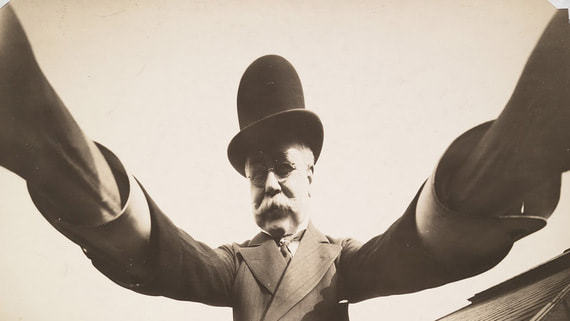
The democratization of photography accelerated dramatically with George Eastman’s introduction of the Kodak camera in 1888, featuring the revolutionary slogan “You press the button, we do the rest.” Suddenly, photography was no longer confined to professionals with specialized knowledge. Amateur photographers began experimenting with mirror selfies, arm-extended self-portraits, and creative angles that would seem remarkably familiar to modern social media users. By the early 20th century, the practice had become so common that special mirror attachments and viewfinders were designed specifically to facilitate self-portraiture.
From Film to Digital: The Evolution Continues
The 20th century witnessed continuous innovation in self-portraiture technology. The advent of instant photography with Polaroid cameras in 1948 added immediacy to the process, allowing photographers to see their results within minutes. Timer functions became standard features on consumer cameras, and the widespread adoption of compact 35mm cameras made spontaneous self-documentation easier than ever. However, the true revolution came with the digital age. The first camera phone was introduced in Japan in 2000, and by the mid-2000s, front-facing cameras specifically designed for self-portraits began appearing on mobile devices. The term “selfie” itself was first documented in an Australian online forum in 2002 and was named Oxford Dictionaries’ Word of the Year in 2013.
Today, an estimated 93 million selfies are taken daily worldwide, with social media platforms serving as vast galleries for this modern form of self-expression. Yet the fundamental human desire driving this phenomenon — the wish to document our existence, control our image, and share our experiences with others — remains unchanged from the days of Robert Cornelius standing motionless before his camera in 1839. International Selfie Day serves as a reminder that this seemingly modern obsession has deep historical roots, connecting contemporary smartphone users with photography pioneers who first dared to turn the camera on themselves nearly two hundred years ago.
Expert Opinion: The evolution of self-portraiture reflects broader technological and social transformations in how humans relate to their own image and identity. As augmented reality filters and AI-enhanced photography continue to blur the line between authentic self-representation and digital manipulation, we may be entering a new era where the concept of the “selfie” undergoes another fundamental transformation. Future historians will likely view our current selfie culture as a pivotal moment when personal image-making became truly universal and instantaneous.