
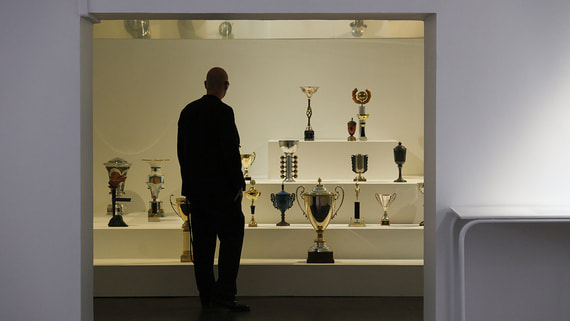
The Moscow Museum of Modern Art (MMOMA) is currently hosting a remarkable exhibition dedicated to the legendary Luzhniki sports complex, transforming the iconic venue’s image into a vivid portrait of an entire era. The exhibition explores how this monumental stadium has served not merely as a sports facility, but as a living repository of Soviet and Russian cultural memory, capturing decades of athletic triumphs, political gatherings, and unforgettable concerts that have shaped the nation’s collective consciousness.
Luzhniki Stadium, officially known as the Grand Sports Arena, stands as one of the most significant architectural and cultural landmarks in Russian history. Originally constructed between 1955 and 1956, the stadium was built in record time to host the Spartakiad of the Peoples of the USSR, demonstrating the Soviet Union’s engineering capabilities and its ambition to create world-class sporting infrastructure. The complex was designed by architects Alexander Vlasov, Igor Rozhin, Nikolai Ullas, and others, who envisioned a multi-purpose venue that would serve generations of athletes and spectators alike.
A Venue That Witnessed History
Throughout its nearly seven decades of existence, Luzhniki has been the stage for some of the most pivotal moments in sports history. The stadium served as the main venue for the 1980 Summer Olympics, an event that remains etched in the memories of millions despite the political tensions of the Cold War era. More recently, it hosted the opening and closing ceremonies, as well as the final match, of the 2018 FIFA World Cup, bringing the facility once again to the center of global attention. The stadium has undergone multiple renovations, most notably a comprehensive reconstruction completed in 2017 that preserved its historic facade while modernizing its interior to meet contemporary international standards.
Beyond athletics, Luzhniki has served as a cultural amphitheater of unprecedented scale. The stadium has welcomed some of the world’s greatest musical acts, from legendary rock bands to international pop stars, creating memories for millions of concert-goers. Political rallies and public gatherings have also filled its seats, marking it as a space where the pulse of the nation could be felt most acutely. The MMOMA exhibition captures this multifaceted identity through archival photographs, personal testimonies, and artistic interpretations that reveal the emotional depth of the venue’s significance.
Preserving Cultural Heritage Through Art
The exhibition at MMOMA employs a curatorial approach that blends documentary evidence with contemporary artistic perspectives. Visitors encounter not only historical artifacts and photographs but also works by modern artists who have reinterpreted the stadium’s legacy through various media. This combination allows viewers to experience Luzhniki both as a physical structure and as a symbol laden with meaning, representing themes of national pride, collective achievement, and the passage of time. The curators have emphasized how spaces like Luzhniki become imbued with memories, transforming from mere concrete and steel into sacred grounds where personal and national histories intertwine.
The significance of preserving such cultural landmarks through artistic documentation cannot be overstated. As cities evolve and architectural landscapes change, exhibitions like this one serve as vital bridges connecting past and present. They remind contemporary audiences of the experiences that shaped previous generations while inviting reflection on how we might preserve our own memories for future generations. Luzhniki, with its capacity to hold over 80,000 spectators, represents more than athletic competition—it embodies the human desire for community, celebration, and shared experience on a monumental scale.
Legacy and Future Significance
As visitors walk through the MMOMA galleries, they are invited to consider their own connections to this iconic venue. Whether through memories of watching historic sporting events, attending concerts, or simply recognizing Luzhniki as a symbol of Russian cultural identity, the exhibition encourages personal reflection alongside historical education. The stadium continues to host major events today, ensuring that new chapters are constantly being added to its rich narrative. The exhibition ultimately suggests that places like Luzhniki transcend their functional purposes, becoming treasuries of collective memory that help define who we are as communities and as nations.
Expert Opinion: This exhibition represents a growing trend in museum curation that recognizes sports venues and public spaces as legitimate subjects of cultural heritage preservation. As urban landscapes undergo rapid transformation worldwide, documenting the emotional and social significance of iconic structures becomes increasingly important. Luzhniki’s continued relevance, both as an active venue and as a subject of artistic contemplation, suggests that such spaces will only grow in cultural value as they accumulate more layers of historical significance.