Chrono Trigger Explained: Why It’s Still Called One of the Greatest JRPGs
The Dream Team, combo Techs, a dozen endings and time travel done right: why Square's 1995 Chrono Trigger still tops greatest-RPG lists.
Lists of the greatest role-playing games almost always include Chrono Trigger, and it often sits near the top. It is a Super Famicom game from 1995. You can finish it in a few dozen hours, far less than many of its peers, and its graphics are 16-bit sprites. Its lasting reputation comes from how many ideas it got right at once. It has visible enemies instead of random battles, party combos, a story you can approach in different ways, more than a dozen endings, and a New Game+ mode that later games still copy.
This article covers who made it, how its systems work, why the time-travel structure still holds up, what followed, and how to play it today.
The “Dream Team” Behind It
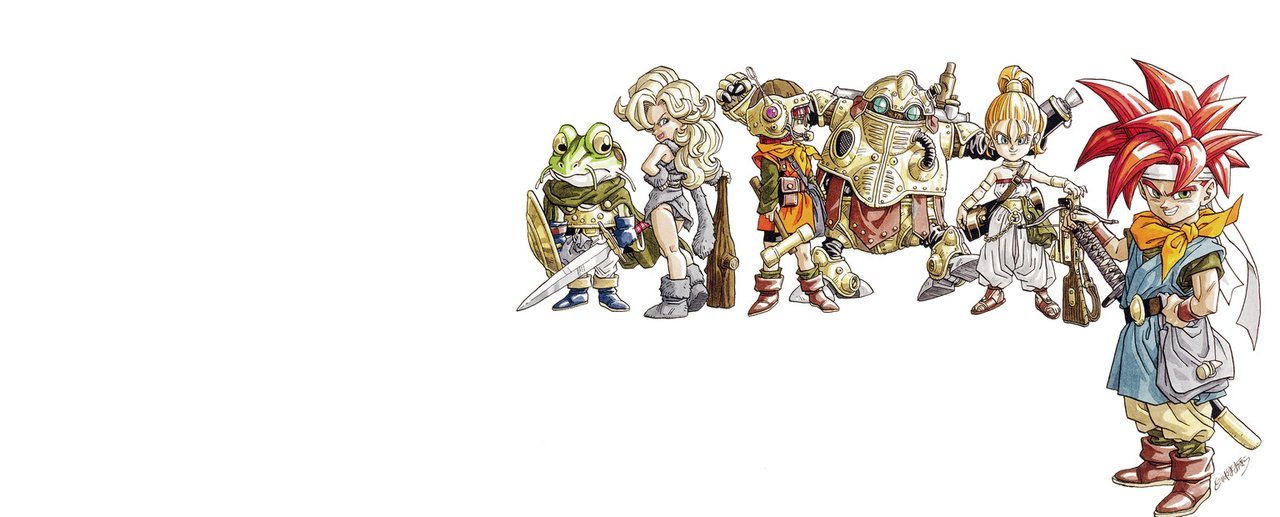
Chrono Trigger began in early 1993 as a project that brought together famous names from Japan’s two biggest RPG series. Hironobu Sakaguchi, creator of Final Fantasy, worked with Yuji Horii, creator of Dragon Quest, and Akira Toriyama, the Dragon Ball artist who also designed Dragon Quest’s characters and monsters. Square promoted them as the “Dream Team.” If you have read our histories of Final Fantasy and Dragon Quest, you will see both series in it. It has Square’s cinematic flair and battle systems, and Horii’s focus on clear, charming storytelling.
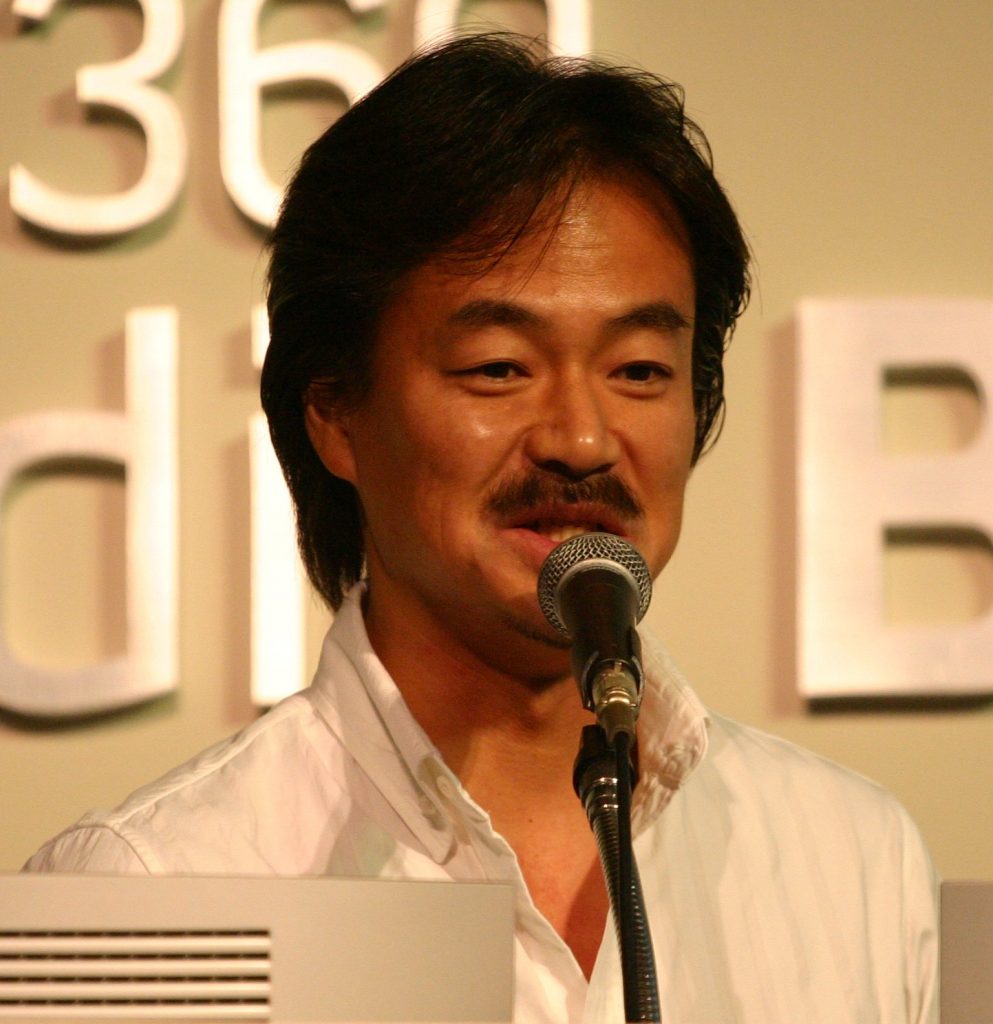
The famous names were only part of the team. The game was directed by Takashi Tokita, Yoshinori Kitase and Akihiko Matsui, and produced by Kazuhiko Aoki. Masato Kato wrote most of the story. The music was largely composed by Yasunori Mitsuda, who was then early in his career. When Mitsuda fell ill during production, Nobuo Uematsu wrote about ten tracks, and Noriko Matsueda contributed one. The soundtrack is still among the most performed in game music.
The game launched in Japan on March 11, 1995, and in North America later that summer. In Japan it was the second-best-selling game of 1995, behind only Dragon Quest VI. It sold two million copies in its first two months.
How the Combat Works: ATB 2.0 and Techs
Chrono Trigger uses “Active Time Battle Version 2,” an update of the ATB system Hiroyuki Ito designed for Final Fantasy IV. Each character has a gauge that fills in real time, and they act when it is full. Enemies keep acting while you scroll menus, unless you switch to the slower “Wait” mode. For more on where ATB fits among turn-based and action designs, see our guide to RPG combat systems.
No battle screen, no random encounters
Many JRPGs of the time cut to a separate battle screen at random moments. In Chrono Trigger, enemies are visible on the map. When you run into them, the fight happens right there with no transition. You can often avoid fights. Because battles take place where you are, positions matter. Some attacks hit in a line, a circle or a cone, so enemies standing close together can be hit at once.
Single, Double and Triple Techs
Each character learns “Techs,” special skills that cost magic points. The game’s best-known feature is combining them. Two characters with full gauges can perform a Double Tech, for example mixing one character’s sword skill with another’s fire magic. Some three-character parties unlock Triple Techs, and certain rare items unlock extra ones. The Steam store page counts more than 50 combo attacks between two or three characters.
This system changes how you choose a party. You are not only picking the three strongest fighters. You are picking pairs and trios whose combos cover elements, area attacks and healing. Trying different groups is much of the fun on a second playthrough.
Time Travel That Actually Matters
The story starts small. At a millennial fair in 1000 AD, Crono meets a girl named Marle, and an experimental teleporter built by his inventor friend Lucca sends her back in time. Before long the group learns that in 1999 AD a creature called Lavos will rise and destroy the world. The goal becomes changing history to prevent it.
The game lets you travel between seven eras:
- 65,000,000 BC: prehistory, with cave-dwelling humans and reptile-like Reptites.
- 12,000 BC: the magical Kingdom of Zeal, floating above a world in an ice age.
- 600 AD: a medieval kingdom at war with the fiend Magus.
- 1000 AD: the “present.”
- 1999 AD: the Day of Lavos.
- 2300 AD: a ruined future after Lavos.
- The End of Time: a hub outside history that links the eras.
Time travel here is a design tool, not only a story idea. Things you do in one era show up in another. Plant something in the past and a forest grows in the future. Help someone in the Middle Ages and their descendants remember it. Many side quests late in the game are about fixing old regrets across centuries. These are the parts players remember most, and they work because the game made you care about each era first.
Multiple Endings and the Birth of a Feature
Once you can reach the End of Time, you can fight Lavos at almost any point. The ending you get depends on when you win and what you have done. The original release has twelve endings. Later versions (DS, mobile and Steam) bring the total to thirteen. Some are serious, some are jokes, and some only show up if you fight Lavos very early.
These endings tie into one of the game’s most copied features: New Game+. After beating the game, you can start again with your levels, Techs and equipment, though not your money, and some story items are removed. Being that strong makes it possible to challenge Lavos early and see endings you would otherwise miss. Chrono Trigger is often cited as the game that made NG+ popular. Whether or not it was the very first, it showed why the idea makes sense. The replay is not just harder; it shows you new things.
Why It Is Still Ranked So Highly
Many 16-bit RPGs were loved in their day but feel slow now. Chrono Trigger still feels modern for a few reasons.
- Pacing. A first run is far shorter than many JRPGs of the time or since. It wastes little time and introduces new eras, party members and twists at a steady pace.
- Visible encounters. Without random battles, you rarely feel forced to grind. Battles happen where you can see them.
- Characters with their own arcs. Frog, Robo, Ayla and the anti-hero Magus each have their own story and side quest, and those quests change how you see the main plot.
- Player freedom without confusion. The order of late-game quests is up to you, and the final fight is always available, but the main path is always clear.
- Music and art. Toriyama’s designs and Mitsuda’s score set the game’s identity, and Square’s cinematic style later grew into the 3D era.
Critics agreed from the start. Electronic Gaming Monthly named it Best Super NES Game and Best RPG in its 1996 awards. Across all versions, it had sold more than five million copies worldwide as of March 2025.
Radical Dreamers and Chrono Cross
Chrono Trigger never got a direct sequel with the same cast. Writer Masato Kato made Radical Dreamers (1996), a text-based side story released in Japan on the Satellaview, a satellite add-on for the Super Famicom. He later reworked its themes into Chrono Cross, released for PlayStation in Japan on November 18, 1999 and in North America on August 15, 2000. Kato directed it and wrote the main story.
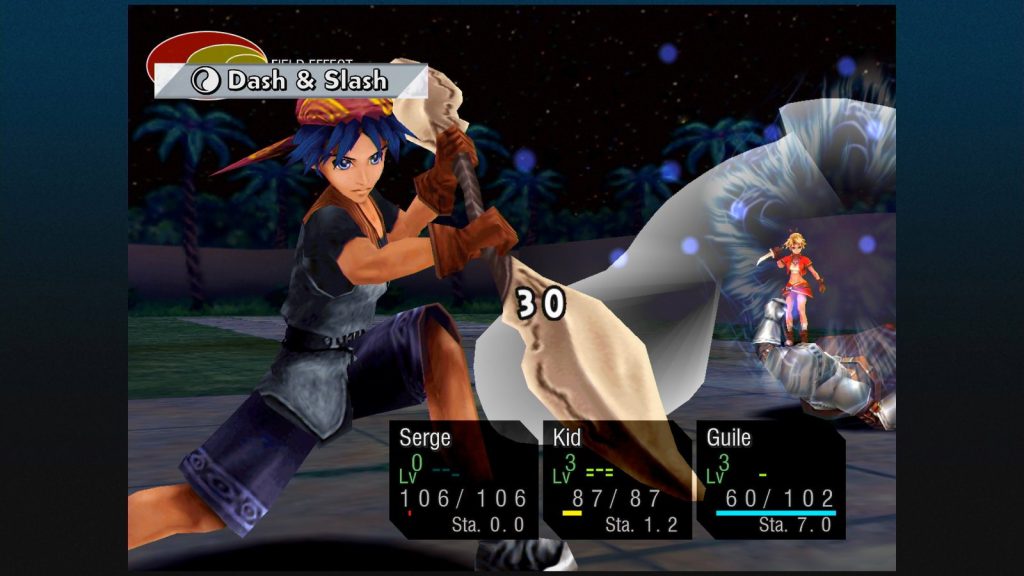
Chrono Cross is set in the same world as Trigger but plays very differently. You play Serge, a teenager from a fishing village in the tropical El Nido archipelago, who travels between two parallel dimensions called “Home” and “Another.” There are 45 possible party members, and you can’t recruit all of them in one playthrough. Combat uses a stamina system and an Element grid, where each character equips spell-like Elements in a grid with its own layout. The developers described it as a new Chrono game with connections to Trigger rather than a direct sequel. Fans still debate how it treats Trigger’s cast.
Chrono Cross was remastered as Chrono Cross: The Radical Dreamers Edition on April 7, 2022, for Switch, PlayStation 4, Windows and Xbox One. As its name suggests, that edition also bundles Radical Dreamers.
How to Play Chrono Trigger Today
The game has been re-released several times, and the versions differ:
| Version | Release | Notes |
|---|---|---|
| Super NES / Super Famicom | 1995 | The original; collectors’ item today. |
| PlayStation | 1999 (JP), 2001 (NA, in Final Fantasy Chronicles) | Ported by Tose; reached North America only in the Final Fantasy Chronicles bundle. |
| Nintendo DS | November 2008 | Added the Lost Sanctum and Dimensional Vortex areas and the thirteenth ending. |
| iOS / Android | 2011 (iOS), 2012 (Android worldwide) | Touch-screen versions; also include the thirteenth ending. |
| Windows (Steam) | February 27, 2018 | Includes the Dimensional Vortex and Lost Sanctum; poorly received at launch, then improved through patches, the last in March 2022 adding ultrawide support. |
As of October 2026, the Steam and mobile versions are the easiest official ways to buy and play it. The DS version is still a favorite with fans who want the extra content on a handheld. Square Enix marked the game’s 30th anniversary in 2025 with commemorative projects, and fans have long asked for a modern console release. We have not found an official announcement of one.
Tips for first-time players
- Use “Wait” mode if the ATB pace feels rushed. Enemies pause while you browse menus.
- Try different parties. The best Double and Triple Techs come from unexpected pairs.
- Do the character side quests before the final battle. They are the game’s emotional heart and greatly strengthen your party.
- Finish at least once, then try NG+. Fighting Lavos early is the best way to see the other endings.
The Legacy in One Sentence
Chrono Trigger showed that a JRPG could be fairly short, let the player shape the story, and be built to replay, all without losing a strong central story. Visible enemies, combo attacks, New Game+ and multiple endings are now common in the genre, and many of them were made popular by this one game.