The Legend of Heroes: Trails Series Explained and Play Order
How Falcom's interconnected Trails games fit together, why order matters, the recommended play order and where the Trails in the Sky remakes fit in 2026.
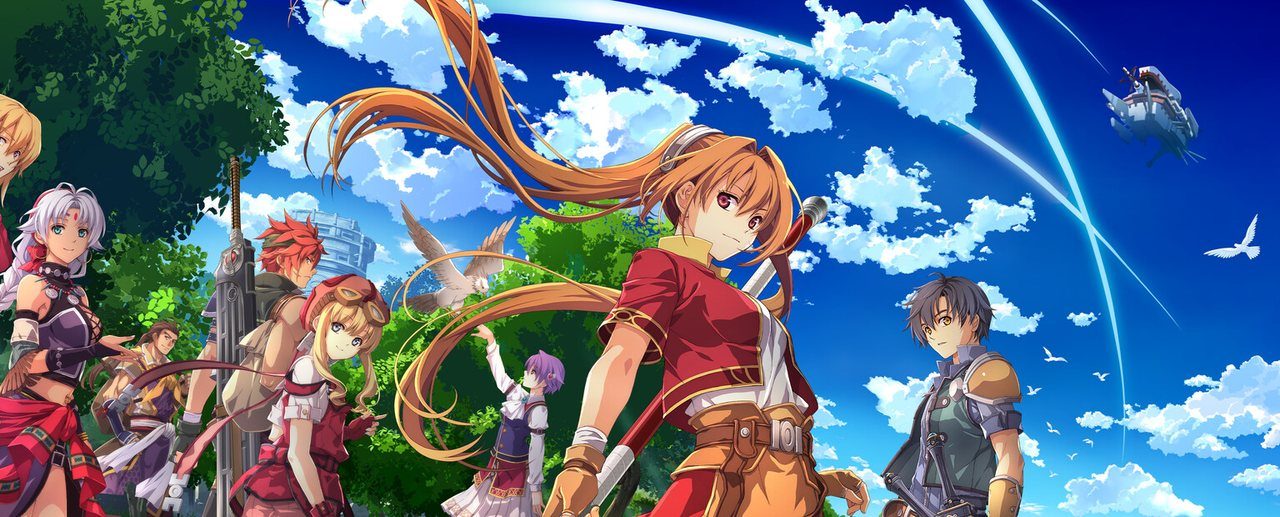
Most long-running JRPG series reset with every entry: a new world, a new cast, a fresh start. Nihon Falcom’s Trails games do the opposite. Since 2004, the studio has been telling one continuous story set on a single continent, with characters, politics and mysteries that carry across more than a dozen games. That makes Trails one of the most rewarding series in the genre and one of the most confusing to start. This guide explains how the series is structured, why play order matters and the order we recommend as of October 2026.
What Is the Trails Series?
Trails (Kiseki in Japan) is a sub-series of Falcom’s long-running The Legend of Heroes brand, which dates back to Dragon Slayer: The Legend of Heroes in 1989. The Trails games began with Trails in the Sky, released in Japan for Windows in 2004.
Every Trails game is set on the continent of Zemuria, and each story arc focuses on a different nation or city-state. The games share a world map, a history and a long-running conspiracy that slowly comes into focus across arcs. Characters from earlier games regularly reappear, sometimes in major roles.
Trails is known for a few things in particular:
- Worldbuilding detail. Towns change between chapters, NPCs have their own small storylines, and political events build over many games.
- Long scripts. When Xseed Games acquired the rights to the first game, it delayed release partly because of the script’s size, about 1.5 million Japanese characters.
- Turn-based combat with depth. Characters use Arts (magic), Crafts (special skills) and powerful S-Crafts, with a turn-order bar that can be manipulated. Our guide to RPG combat systems explains the turn-based family Trails belongs to.
- Slow-burn storytelling. Games often take their time setting up characters before major plot turns.
As of 2026, the series had sold ten million copies worldwide.
The Story Arcs
The Trails games are grouped into arcs by setting.
Liberl arc: Trails in the Sky
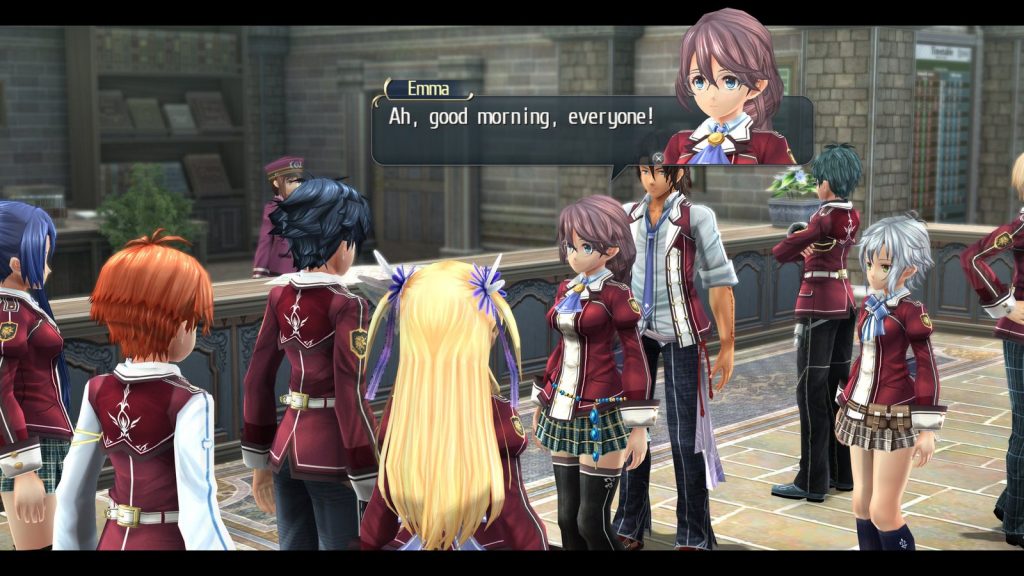
The series begins in the small Kingdom of Liberl with Estelle Bright and her adoptive brother Joshua, two young trainee “bracers” (a kind of civilian guild of problem-solvers). The arc is a coming-of-age adventure that gradually reveals a larger conspiracy involving a secret society. It spans three games: Trails in the Sky (often called FC, for “First Chapter”), Trails in the Sky SC (“Second Chapter”) and Trails in the Sky the 3rd.
Crossbell arc: Trails from Zero and Trails to Azure
The Crossbell arc moves to an independent city-state squeezed between two great powers. Lloyd Bannings, a rookie police investigator, and his team deal with corruption and organized crime. Trails from Zero and Trails to Azure were released in Japan in 2010 and 2011 but did not receive official English releases until NIS America published them in 2022 and 2023.
Erebonia arc: Trails of Cold Steel
The Erebonian Empire, a militaristic neighbor of Liberl, is the setting for the longest arc. Rean Schwarzer and his classmates at a military academy are caught up in the empire’s civil conflicts. The arc spans Trails of Cold Steel I through IV and concludes with Trails into Reverie, which ties together characters from all previous arcs.
Calvard arc: Trails Through Daybreak
The current arc moves to the Calvard Republic, a modern, multicultural nation. Its protagonist, Van Arkride, is a “spriggan,” a freelance fixer working in legal gray areas. The arc so far includes Trails Through Daybreak, Trails Through Daybreak II and Trails Beyond the Horizon. Daybreak also introduced a hybrid battle system mixing real-time field combat with traditional turn-based fights.
Release Order and English Releases
Because English localizations arrived out of order, many players have been confused about where to start. The table below lists the core games in release order with their Japanese and English release years.
| Game | Arc | Japan | English |
|---|---|---|---|
| Trails in the Sky | Liberl | 2004 | 2011 (PSP), 2014 (PC) |
| Trails in the Sky SC | Liberl | 2006 | 2015 |
| Trails in the Sky the 3rd | Liberl | 2007 | Later in the 2010s |
| Trails from Zero | Crossbell | 2010 | 2022 |
| Trails to Azure | Crossbell | 2011 | 2023 |
| Trails of Cold Steel | Erebonia | 2013 | 2015 |
| Trails of Cold Steel II | Erebonia | 2014 | 2016 |
| Trails of Cold Steel III | Erebonia | 2017 | 2019 |
| Trails of Cold Steel IV | Erebonia | 2018 | 2020 |
| Trails into Reverie | Erebonia/Crossbell | 2020 | 2023 |
| Trails Through Daybreak | Calvard | 2021 | 2024 |
| Trails Through Daybreak II | Calvard | 2022 | 2025 |
| Trails Beyond the Horizon | Calvard | 2024 | January 2026 |
The Recommended Play Order
The simplest and most widely recommended approach is to play in Japanese release order. The games were written to be experienced that way, and later entries assume you know earlier characters and events. The recommended order:
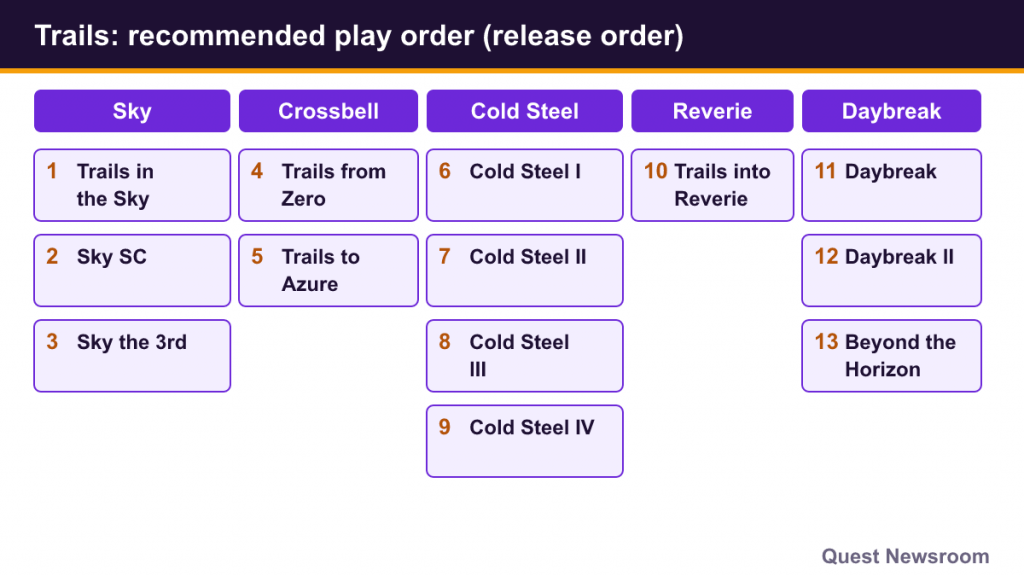
- Trails in the Sky (or the 1st Chapter remake)
- Trails in the Sky SC (or the 2nd Chapter remake)
- Trails in the Sky the 3rd
- Trails from Zero
- Trails to Azure
- Trails of Cold Steel
- Trails of Cold Steel II
- Trails of Cold Steel III
- Trails of Cold Steel IV
- Trails into Reverie
- Trails Through Daybreak
- Trails Through Daybreak II
- Trails Beyond the Horizon
Why order matters so much
In most series, playing out of order means missing a few references. In Trails, it can mean spoiling major twists from earlier games, meeting characters whose importance you can’t appreciate and losing the payoff of plot threads built over several entries. Cold Steel III and IV in particular bring back many characters from the Liberl and Crossbell arcs, and they land much better if you have played those games first.
Can you start elsewhere?
Yes, with trade-offs. Each arc’s first game introduces a new cast and setting, so they are the natural alternative starting points:
- Trails of Cold Steel was many western players’ entry point because it came to English before the Crossbell games. It works, but later Cold Steel games will spoil earlier arcs.
- Trails Through Daybreak is the most modern-feeling start, with a newer battle system and a fresh setting, and it explains its own world well. It still references past events, and long-time fans will catch more.
If you are unsure, start with Trails in the Sky. It is the beginning of the story, and the remake makes it more approachable than ever.
The Trails in the Sky Remakes
For years, the biggest barrier for new players was that the series began with a 2004 PC game that looked and played its age. Falcom addressed that with full remakes:
- Trails in the Sky 1st Chapter was released worldwide on September 19, 2025, for Nintendo Switch, Nintendo Switch 2, PlayStation 5 and Windows. It rebuilds the first game in 3D using the Trails Through Daybreak engine and replaces the original’s purely turn-based combat with a hybrid of action and turn-based battles.
- Trails in the Sky 2nd Chapter, a full remake of Trails in the Sky SC, launched on September 17, 2026, for PlayStation 5, Nintendo Switch 2, Nintendo Switch and Steam, with English and Japanese voice acting.
As of October 2026, no remake of Trails in the Sky the 3rd has been released. Players who finish the two remakes can continue with the original version of the 3rd.
Should you play the remakes or the originals?
For most new players, the remakes are the better choice. They modernize presentation, add voice acting and quality-of-life features, and the hybrid combat feels closer to the newest games in the series. Players who prefer purely turn-based combat or want the original experience can still play the PC versions of the first two games.
Tips for Getting Into Trails
- Talk to NPCs. Many townspeople have storylines that develop across chapters and even games. It is one of the series’ signature pleasures.
- Do side quests when they appear. Many bracer and investigation requests are time-limited and close when the chapter ends.
- Expect a slow start. The first chapters of many Trails games focus on setting up characters. Payoffs come later, often in the next game.
- Carry over saves where offered. Some games reward you with bonuses for clear data from earlier entries on the same platform.
- Pace yourself. This is a multi-game commitment. Taking breaks between arcs is fine; the arcs are natural stopping points.
Common Play-Order Questions
Can I skip Trails in the Sky the 3rd? It is the least essential game in the Liberl arc for plot purposes, since it focuses on character backstories and the wider world rather than a new main conflict. But much of what it reveals about recurring characters and the secret society pays off in later arcs, so it is worth playing if you plan to continue.
Do I need the Crossbell games before Cold Steel? Strictly no, since Cold Steel came to English first and many players started there. But Trails into Reverie, which closes the Erebonia arc, gives Crossbell’s cast a central role, and Cold Steel III and IV reference Crossbell events heavily. Playing Zero and Azure first is strongly recommended now that both are available in English.
Do I need to finish Cold Steel before Daybreak? Daybreak is designed as a fresh start, but it references the Erebonia arc’s ending, so playing in order avoids spoilers.
Is Trails Right for You?
Trails is a great fit if you enjoy character-driven JRPGs, political intrigue and worlds that feel lived in. It is a harder sell if you prefer fast pacing or short, self-contained stories. For a sense of where Trails sits among Japanese RPG traditions, our explainer on JRPG vs. western RPG design offers useful context. If its long-form storytelling appeals, few series reward commitment more.