Fallout Series History: From Interplay to Bethesda
The history of Fallout, from Interplay's 1997 original and Black Isle's sequel to Bethesda's Fallout 3 and 4, Obsidian's New Vegas and the series' status in 2026.
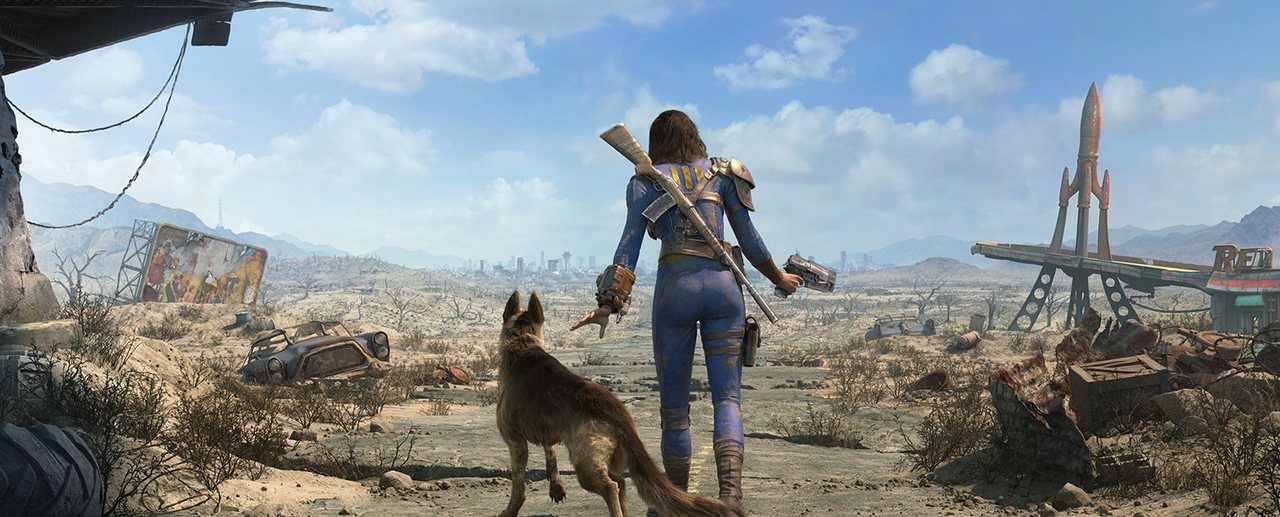
Few RPG series have survived as many lives as Fallout. It began as a PC role-playing game at Interplay in the late 1990s, nearly died when its publisher ran out of money, was reborn as a first-person open-world game under Bethesda, and today stretches across mainline games, an online spin-off, a mobile hit and a television series. Through all of it, the core identity has held: a retro-futuristic wasteland shaped by 1950s optimism, dark humor and choices that rarely have a clean answer. This is how the series developed, and where it stands as of October 2026.
Origins: A Successor to Wasteland
Fallout’s roots go back to Wasteland (1988), a post-apocalyptic party-based RPG published by Interplay. When Interplay set out to make a new post-nuclear RPG in the mid-1990s, the team built a new world rather than a direct sequel, and the result is widely regarded as Wasteland’s spiritual successor.
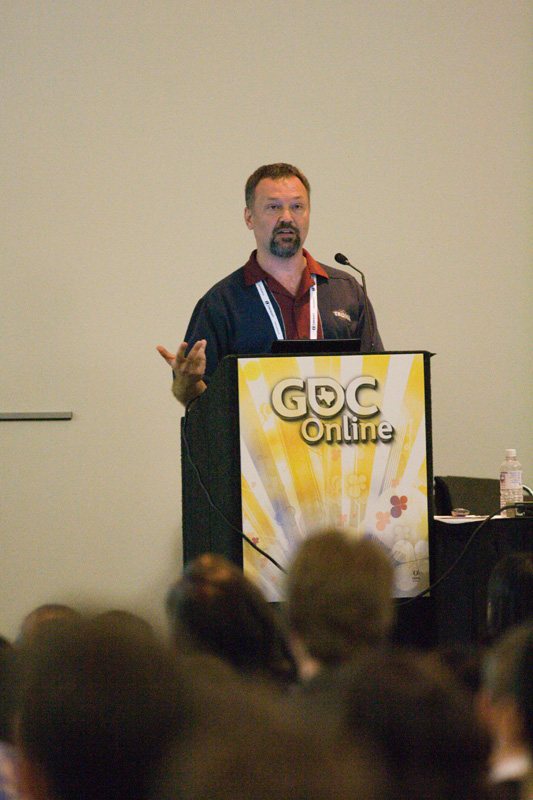
The driving force was Tim Cain, who created and produced the game and was one of its programmers; he was the project’s sole developer for the first six months. Leonard Boyarsky shaped the game’s distinctive art direction, which became the series’ visual signature: a future imagined by the 1950s, all chrome, vacuum tubes and cheerful propaganda, blown apart by nuclear war.
From GURPS to SPECIAL
Fallout was originally built on GURPS, Steve Jackson Games’ generic tabletop role-playing system. In March 1997, with the game well into development, Interplay dropped the GURPS license after Steve Jackson Games objected to the game’s violence. The team replaced it with its own system, SPECIAL, designed and coded by Christopher Taylor and Tim Cain. The acronym stands for the seven attributes: Strength, Perception, Endurance, Charisma, Intelligence, Agility and Luck. For a deeper look at how SPECIAL compares with other attribute systems, see our explainer on RPG character stats.
Fallout (1997): The Vault Dweller’s Journey
Fallout was released in North America on October 10, 1997, for MS-DOS and Windows, developed and published by Interplay Productions. It is set in 2161, nearly a century after a nuclear war that began on October 23, 2077. You play a resident of Vault 13, an underground shelter beneath the mountains of Southern California, whose water purification chip has failed. With 150 days of water left, you are sent into the wasteland to find a replacement.
That time limit was a bold design choice, and the game was full of others. Fallout used isometric, turn-based combat with action points and targeted shots to specific body parts. Quests could often be solved through combat, stealth, speech or science, and the world remembered what you did. Its ending slides showed how your actions changed each settlement, a format that later games would copy.
Fallout is a key text in the history of the CRPG, sitting between the dungeon crawlers of the 1980s and the Infinity Engine games that followed. Our explainer on what a CRPG is covers that lineage.
Fallout 2 (1998) and the Black Isle Era
Fallout 2 followed in 1998, credited to Black Isle Studios, Interplay’s internal RPG division. Tim Cain contributed early ideas but left Interplay during its development. Set decades after the first game, it casts you as the Chosen One, a descendant of the original Vault Dweller, searching for a device called the G.E.C.K. to save your tribal village.
Fallout 2 was bigger, stranger and more irreverent than the original, with a larger map, more cities and more pop-culture humor. Many fans consider it the high point of the isometric era, while others prefer the first game’s tighter, bleaker tone.
Interplay also released a tactical spin-off, Fallout Tactics (2001), developed by Micro Forté and 14 Degrees East. It focused on squad combat rather than role-playing, and a planned sequel was canceled in December 2001 after the original sold poorly.
Van Buren: The Fallout 3 That Never Was
Black Isle began work on its own Fallout 3, codenamed Van Buren. But Interplay was in deep financial trouble. In December 2003, budget cuts led Interplay to dismiss its PC development team, and Van Buren was canceled. Black Isle itself was closed in 2004.
Van Buren has become one of the most famous canceled RPGs, partly because some of its design documents and a tech demo later circulated among fans. Several of the developers involved went on to Obsidian Entertainment, a studio founded by former Black Isle and Interplay staff, which would return to Fallout years later.
Bethesda Takes Over: Fallout 3 (2008)
In 2004, Bethesda Softworks, the publisher of The Elder Scrolls, acquired the rights to make Fallout 3 from Interplay, and the project was announced in July 2004. Bethesda later took full ownership of the franchise; a long-running dispute over a planned Interplay “Fallout Online” game was settled on January 2, 2012, with the franchise rights going to Bethesda.
Bethesda Game Studios reinvented the series. Fallout 3, released in North America on October 28, 2008, for Windows, PlayStation 3 and Xbox 360, was a first-person open-world RPG in the mold of Oblivion. It moved the setting to the ruins of Washington, D.C., known as the Capital Wasteland, in 2277.
The key bridge between old and new was V.A.T.S., the Vault-Tec Assisted Targeting System. It pauses combat and lets players spend action points on shots against specific body parts, a nod to the targeted shots of the originals. Todd Howard, who led the project, wanted combat that blended real-time and turn-based elements.
Some longtime fans disliked the shift to first person, but Fallout 3 was a huge success. It sold 4.7 million copies worldwide in its first week, won numerous Game of the Year awards and introduced the series to a much larger audience. Our Elder Scrolls series history covers the studio’s other open-world RPGs.
Fallout: New Vegas (2010): Obsidian Returns to the Wasteland
For the next game, Bethesda turned to Obsidian Entertainment, bringing several Black Isle veterans back to the series. Fallout: New Vegas was released in North America on October 19, 2010. Josh Sawyer was project director, and Chris Avellone later led design on the downloadable content. Obsidian had 18 months to make it, a short schedule for a game of its size.
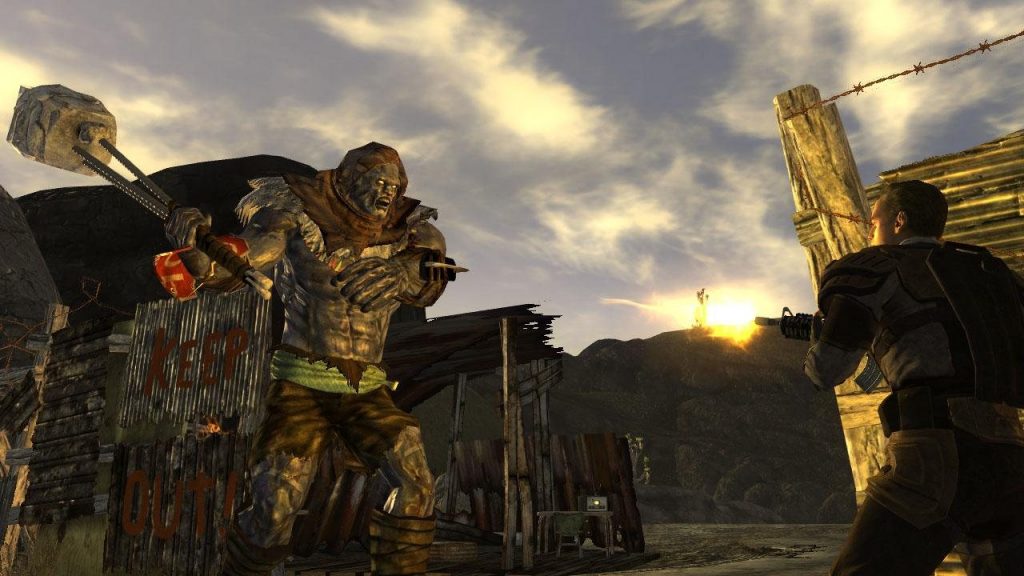
New Vegas is set in 2281 in the Mojave Desert. You play a courier who is shot and left for dead, and your search for the people responsible pulls you into a struggle for control of the region between the New California Republic, Caesar’s Legion and the mysterious Mr. House. Its faction reputation system means your actions change how each group treats you, which quests open up and even whether companions stay with you.
It also added an optional Hardcore mode, where you need to eat, drink and sleep, ammunition has weight and companions can die permanently. Its four story DLCs, Dead Money, Honest Hearts, Old World Blues and Lonesome Road, are highly regarded.
New Vegas launched with technical problems, and it famously missed a Metacritic-based bonus that Bethesda had offered Obsidian for a score of 85 or higher, landing at 84 on PC and Xbox 360. Its reputation has grown steadily since, and many fans now call it the best-written game in the series.
Fallout 4 (2015): Building in the Commonwealth
Bethesda Game Studios returned with Fallout 4, released on November 10, 2015, for PlayStation 4, Windows and Xbox One, and built on the Creation Engine used for Skyrim. It is set in 2287 in the Commonwealth, the post-apocalyptic Boston area. The Sole Survivor emerges from cryogenic sleep in Vault 111 to search for their kidnapped son, and eventually must choose among four factions: the Institute, the Brotherhood of Steel, the Minutemen and the Railroad.
Fallout 4 was the first mainline game with a fully voiced protagonist. It added settlement building, deep weapon and armor modification and crafting from scavenged junk. Critics praised its world and freedom but criticized its simplified RPG elements. It won Best Game at the BAFTA Games Awards and Game of the Year at the D.I.C.E. Awards.
Fallout 4 has had a long tail. PlayStation 5 and Xbox Series X|S versions arrived on April 25, 2024, an Anniversary Edition launched on November 10, 2025, and a Nintendo Switch 2 version followed on February 24, 2026. As of July 2026, Bethesda reported more than 35 million copies sold.
Spin-Offs: Fallout Shelter and Fallout 76
Two spin-offs broadened the brand. Fallout Shelter, a free vault-management game, launched on iOS in June 2015 and later reached Android, PC and consoles. Fallout 76, released on November 14, 2018, was the series’ first online multiplayer game, set in West Virginia. It had a troubled launch but has continued to receive updates; as an online game, it sits outside this site’s single-player focus, so we mention it only briefly.
Where Fallout Stands as of October 2026
On July 17, 2026, Bethesda Game Studios published a note confirming several Fallout projects:
- Remasters: Bethesda said it has been working on remasters of both Fallout 3 and Fallout: New Vegas. No release dates were announced.
- Obsidian: Obsidian Entertainment is working with Bethesda on a new Fallout project, with details to come later.
- Fallout 5: described as the franchise’s “long-range destination,” it is in preproduction on Creation Engine 3.
- Priorities: The Elder Scrolls VI remains the studio’s primary development focus.
As of October 2026, none of these projects has a release date.
Where to Start Playing Fallout
Because each mainline game has its own setting and protagonist, you can start anywhere. Fallout 4 is the most modern and approachable; Fallout: New Vegas is the choice for players who prioritize writing and faction politics; Fallout 3 offers the classic Bethesda formula. Players curious about the series’ roots will find Fallout and Fallout 2 still rewarding, provided they are comfortable with isometric, turn-based combat and late-1990s interfaces.