
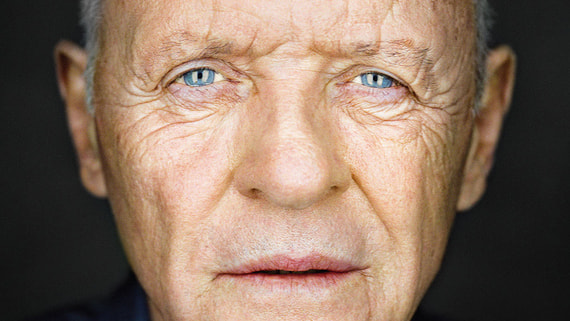
Sir Anthony Hopkins, one of cinema’s most revered actors, has opened up in a remarkably candid reflection on his legendary career and personal demons. The Welsh-born performer, now in his late eighties, has spoken with unusual frankness about the role that defined a generation of movie villains and the battle with alcoholism that nearly destroyed him before he achieved his greatest success. His story serves as both a testament to artistic brilliance and a powerful message of hope for those struggling with addiction.
Hopkins’ portrayal of Dr. Hannibal Lecter in “The Silence of the Lambs” (1991) remains one of cinema’s most chilling achievements. Despite appearing on screen for only sixteen minutes of the film’s runtime, his performance earned him the Academy Award for Best Actor and created a cultural phenomenon that continues to influence portrayals of intelligent, sophisticated villainy to this day. The character, a brilliant psychiatrist turned cannibalistic serial killer, required Hopkins to tap into something deeply unsettling while maintaining an almost hypnotic charm that made audiences unable to look away.
The Method Behind the Madness
In preparing for the role, Hopkins revealed his meticulous approach to character development. He reportedly read the script over 200 times, memorizing not just his lines but the rhythm and texture of every scene. This obsessive preparation allowed him to deliver Lecter’s dialogue with an unsettling stillness that director Jonathan Demme captured masterfully. The actor’s famous line reading of “I ate his liver with some fava beans and a nice Chianti” was followed by that disturbing hissing sound—an improvisation that Hopkins added, which became instantly iconic. His blue-eyed stare, described by co-star Jodie Foster as genuinely terrifying, was enhanced by his decision to rarely blink during his scenes, creating an almost reptilian quality that audiences found profoundly disturbing.
The success of his Hannibal Lecter launched Hopkins into the stratosphere of Hollywood leading men, a remarkable achievement for an actor who was already in his fifties. He would reprise the role in two subsequent films—”Hannibal” (2001) and “Red Dragon” (2002)—though neither quite captured the lightning-in-a-bottle quality of the original. The character earned the American Film Institute’s ranking as the number one movie villain of all time, surpassing even Darth Vader and Norman Bates.
A Long Journey Through Darkness
Yet behind this extraordinary success lay decades of personal struggle. Hopkins has been refreshingly honest about his battle with alcoholism, a disease that plagued him throughout his early career. Born in 1937 in Port Talbot, Wales, he grew up feeling like an outsider—dyslexic and academically struggling, he found solace first in playing piano and later in acting. But as his career progressed through British theater and early film roles, alcohol became an increasingly destructive presence in his life. He has described himself during this period as angry, difficult to work with, and deeply unhappy despite his obvious talent.
The turning point came on December 29, 1975, when Hopkins woke up in a hotel room in Phoenix, Arizona, with no memory of how he had gotten there or where his car was. That moment of clarity—or perhaps terror—led him to Alcoholics Anonymous, where he has maintained his sobriety for nearly fifty years. “I realized I had a choice: I could continue destroying myself, or I could live,” Hopkins has reflected. His sobriety date remains a cornerstone of his identity, and he frequently speaks about recovery to help others facing similar battles. The actor often mentions looking in the mirror and saying to his younger self, “We made it, kid”—a phrase that encapsulates both the distance he has traveled and his gratitude for survival.
Legacy and Continued Brilliance
Hopkins’ post-recovery career reads like a masterclass in sustained excellence. Beyond the Lecter films, he has delivered unforgettable performances in “The Remains of the Day,” “Nixon,” “Amistad,” and more recently “The Father” (2020), which earned him a second Oscar at age 83—making him the oldest Best Actor winner in Academy Award history. His portrayal of a man suffering from dementia was hailed as devastatingly authentic and deeply humane, perhaps informed by his own experiences with vulnerability and the passage of time. The performance demonstrated that even approaching ninety, Hopkins remains capable of work that moves and challenges audiences.
Today, Sir Anthony Hopkins serves as living proof that redemption is possible and that our darkest chapters need not define our final story. His advice to those struggling with addiction is characteristically direct: seek help, stay humble, and take life one day at a time. For aspiring actors, he counsels endless preparation and the courage to take risks. His legacy extends far beyond the unforgettable villains and complex characters he has inhabited—it includes the quiet inspiration he provides to anyone fighting their own demons, proving that with determination and support, transformation remains possible at any age.
Expert Opinion: Hopkins’ career trajectory illustrates a phenomenon that addiction specialists increasingly recognize: creative individuals often possess both heightened sensitivity that fuels their art and vulnerability to substance abuse. His nearly five decades of sobriety, combined with continued artistic excellence well into his eighties, challenges the destructive myth that great art requires suffering or that recovery somehow dulls creative fire. His openness about mental health and addiction has likely helped countless individuals seek help, making his cultural impact extend far beyond cinema.