Dragon Age Series History: From Origins to The Veilguard
How BioWare's Dragon Age grew from a Baldur's Gate successor into an action RPG series, from Origins (2009) to The Veilguard (2024).
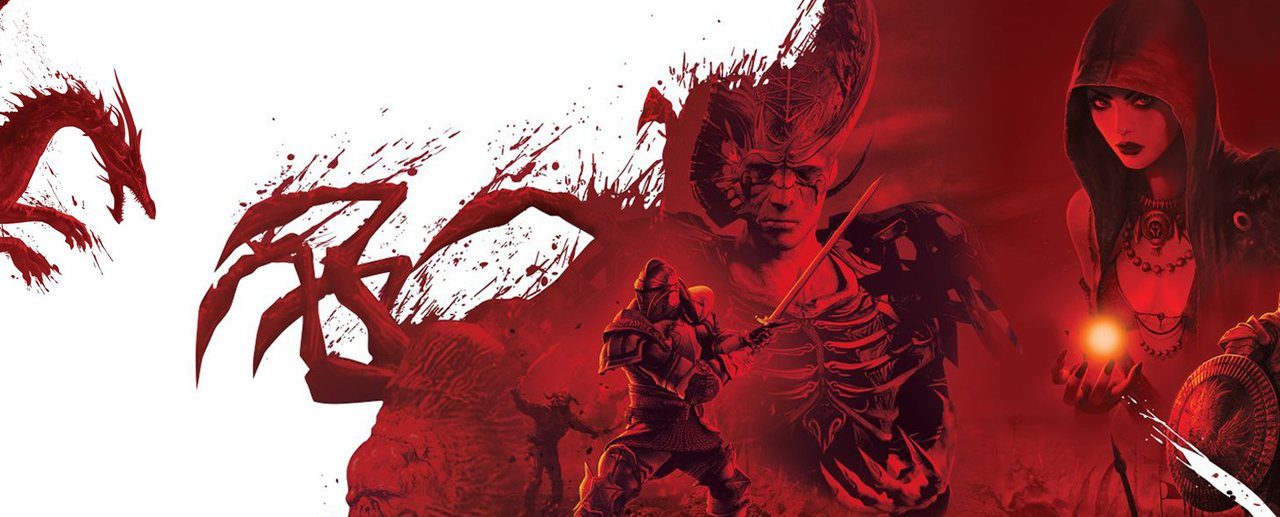
After years of building games on licensed worlds, first Dungeons & Dragons and then Star Wars, BioWare made Dragon Age as a dark fantasy setting it owned outright. Over fifteen years the series put out four main games, and no two play alike: Origins is a slow, tactical party RPG, and The Veilguard is a fast action game. This history covers each entry, the basics of Thedas, the system that carried choices between games, and how the combat changed.
Origins: A Spiritual Successor to Baldur’s Gate (2009)
Development of Dragon Age: Origins began in 2002, and the game was first shown at E3 2004 under the plain title “Dragon Age.” BioWare openly called it a spiritual successor to Baldur’s Gate and Neverwinter Nights. The idea was to make a deep fantasy RPG without the limits of a license. Making the game took far longer than first planned. The team started on the Neverwinter Nights engine and moved to BioWare’s in-house Eclipse engine partway through, which slowed things down considerably.
The game came out on November 3, 2009 for Windows, PlayStation 3 and Xbox 360, and a Mac version followed in December. The player is recruited into the Grey Wardens, an ancient order sworn to fight the darkspawn. The darkspawn are a corrupted horde that pours out of the Deep Roads during events called Blights. Origins opens at the start of the Fifth Blight, and the goal is to unite a divided kingdom of Ferelden against the Archdemon leading the horde.
Six origins, one story
The title refers to the six playable opening chapters: Dalish Elf, City Elf, Human Noble, Dwarf Noble, Dwarf Commoner and Mage. Each is a self-contained prologue. All six lead into the same main story, but your origin decides how people react to you and which old faces return later.
Tactics and companions
Combat could run in real time, but it was built around pausing. You could pull the camera up to a top-down view, freeze the action and queue orders for each party member. A “Tactics” menu let you write simple if-then rules for the companions you weren’t controlling, such as “if an ally’s health drops below 50 percent, cast heal.” The companions are still among the most loved in the genre: Alistair, Morrigan, Leliana, Sten, Oghren, Wynne, Zevran and a Mabari war hound, with Shale added through The Stone Prisoner DLC.
Origins won many awards, including the AIAS award for Role-Playing/Massively Multiplayer Game of the Year and Game of the Year at the first Canadian Videogame Awards. The expansion Awakening followed in March 2010, and an Ultimate Edition collecting everything came out that October.
Dragon Age II: A Smaller Story in a Single City (2011)
Dragon Age II arrived on March 8, 2011 in North America, about sixteen months after Origins. That short gap explains much of what came next. According to reporting on its development, EA gave BioWare roughly 14 to 16 months to make it, which led to crunch. Longtime lead writer David Gaider later said he had to cut about half of the planned quests.
The design was more ambitious than its reputation suggests. You play Hawke, a fully voiced refugee from Ferelden who rises to become Champion of Kirkwall. The dwarf Varric, an unreliable narrator, tells the story to the Seeker Cassandra in flashbacks across three acts set years apart, so you watch one city and one family change over close to a decade.
The conflict between mages and templars ends in a disaster that echoes through the rest of the series. Faster combat won fans, but critics hit the heavily reused environments and wave-spawning enemies. Of the 2011 DLC, Legacy matters most, because it introduces the ancient magister Corypheus.
Inquisition: Open Zones and Game of the Year (2014)
BioWare spent more time on the third game, and it changed the engine as well. Dragon Age: Inquisition launched in North America on November 18, 2014, on both PS3/Xbox 360 and the then-new PS4 and Xbox One, plus Windows. It was built on EA DICE’s Frostbite 3 engine, because Eclipse could not handle the larger, more open spaces the team wanted.
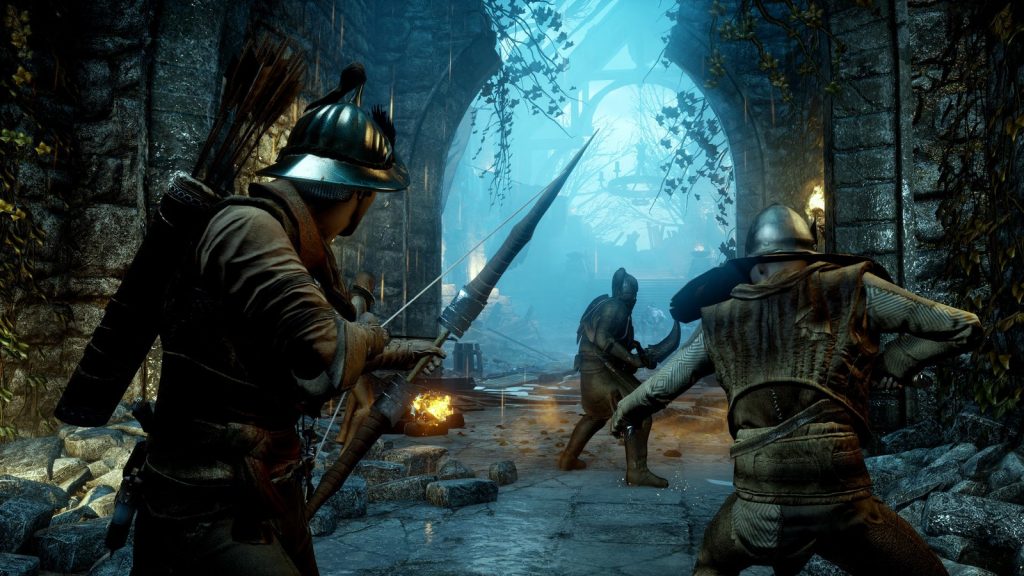
The story begins with a disaster. An explosion at a peace summit tears a hole in the sky called the Breach. Your character survives with a mark on their hand that can close rifts, and becomes the Inquisitor, head of a revived order trying to restore stability. The villain is Corypheus from DA2’s Legacy DLC, and Hawke shows up as a supporting character. The Inquisitor can be human, elf, dwarf or, for the first time in the series, Qunari.
New systems
- Semi-open regions: Instead of one seamless world, Inquisition has many large hub zones full of side content. Unlike some open-world games, the regions do not scale to your level.
- The War Table: From your stronghold of Skyhold, you send advisers and agents on text-based missions that unlock new areas, give rewards and earn influence.
- Tactical View: A pause-and-plan, top-down camera where you could give orders. Some critics found it awkward compared to Origins.
Inquisition won Game of the Year and Best Role Playing Game at The Game Awards 2014. Three story DLCs followed in 2015: Jaws of Hakkon, The Descent and the epilogue Trespasser (September 8, 2015). Trespasser is set two years after the main story and reveals a twist about a central companion that sets up the next game. Players who skip it will be lost in The Veilguard.
The Veilguard: A Long Road to a Fourth Game (2024)
The fourth game took the longest to make. Early work started around 2015 under the codename “Joplin.” That version was cancelled in October 2017 and rebooted in 2018 as “Morrison.” BioWare announced the title as Dragon Age: Dreadwolf in June 2022 and renamed it Dragon Age: The Veilguard in June 2024. It released on October 31, 2024 for Windows, PlayStation 5 and Xbox Series X|S, with Corinne Busche as game director and John Epler as creative director.
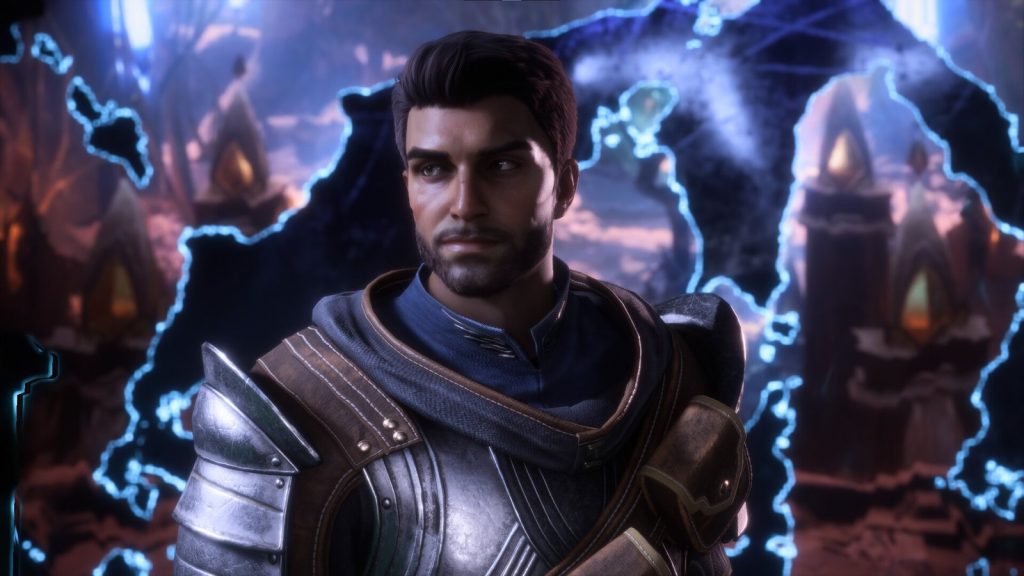
The game takes place about ten years after Inquisition, mostly in northern Thedas: the magocracy of Tevinter, Antiva, and the Grey Wardens’ fortress of Weisshaupt. You play Rook, a customizable human, elf, dwarf or Qunari, who joins one of six factions and tries to stop Solas, the Dread Wolf, from tearing down the Veil. Instead of open zones, the structure is “hub and spoke,” with a central base connected by magical portals to hand-built areas.
Reviews were generally favorable. Critics praised the companions, the visuals, the character creator and the combat. They criticized the writing and how little earlier choices seemed to matter. In January 2025, EA said the game had engaged about 1.5 million players in its launch quarter, nearly half of what it had expected. On January 29, 2025, BioWare announced a restructuring around the next Mass Effect game. Active development on The Veilguard ended with no DLC, and many staff were moved to other EA teams or let go. Busche left the studio after launch. As of October 2026, BioWare has not announced another Dragon Age game.
Thedas in Brief: What You Need to Know
You don’t need to know the lore to enjoy any one game, but a few ideas run through all four.
- The Fade and the Veil: The Fade is a dream-like spirit realm; the Veil separates it from the waking world. Mages draw power from the Fade, and demons try to cross through them.
- The Chantry and the Circle: The main religion keeps mages in Circles watched by templars. Whether that is protection or prison is the series’ longest-running argument.
- Darkspawn and the Blights: Corrupted creatures who wake sleeping Old Gods as Archdemons, starting a Blight. The Grey Wardens exist to stop it.
- Tevinter and the elves: The ancient Tevinter Imperium and the fallen elven empire, along with its gods (Solas among them), drive the later games’ central mystery.
Familiar faces also return, such as Leliana, Varric, Cassandra, Morrigan and Solas, much like the recurring cast of BioWare’s Mass Effect series.
World States, Save Imports and the Dragon Age Keep
From the start, BioWare wanted your decisions to carry forward. Dragon Age II could import an Origins save, so choices like who ruled Ferelden or which companions lived could change later dialogue and cameos. Moving to new consoles for Inquisition made direct save imports impractical. BioWare’s answer was the Dragon Age Keep, a web app launched in October 2014.
In the Keep you set the outcome of each major decision from the first two games, and Inquisition imported that “world state,” so even players without old saves could build their own history.
The Veilguard dropped the full import. Instead it lets you pick three key Inquisition-era decisions and rebuild your Inquisitor, who appears in the story. Some long-time fans saw this as a step back, so keep it in mind if continuity matters to you.
From Tactical to Action: How Combat Changed
The biggest shift across the series is in combat. It is a good example of the wider tension between real-time with pause and action combat.
| Game | Combat model | Party control |
|---|---|---|
| Origins (2009) | Real-time with pause, overhead tactical camera | Full control of every party member, plus scriptable Tactics |
| Dragon Age II (2011) | Faster real-time with pause, more animation-driven | Full control, Tactics kept |
| Inquisition (2014) | Action-leaning with optional Tactical View | Switch between characters; top-down orders |
| The Veilguard (2024) | Real-time action with a pause wheel for ability orders | Control only Rook; command two companions |
Origins rewarded careful setup: a warrior holding enemies, mages behind, frequent pauses to combine spells. Each later game moved control closer to the main character, until in The Veilguard you control only Rook and order two of seven companions through a radial menu. Some fans miss the tactical depth; others prefer the moment-to-moment action. Both views are fair.
Where to Start Today
Each game tells a complete story, but they build on each other. For newcomers:
- Start with Origins if you like party tactics and are fine with 2009-era visuals. It is still the most complete look at what the series set out to be, and the origin stories are its best feature.
- Start with Inquisition if you prefer a more modern feel. It works as a standalone, and the Keep lets you set earlier choices without playing the older games. Play the Trespasser DLC before moving on.
- Treat Dragon Age II as a character piece. If you go in expecting a personal story in one city rather than an epic quest, its strengths are much easier to see.
- Play The Veilguard last. It wraps up threads from Inquisition and Trespasser, especially Solas’s story, and lands much better if you know them.
The games differ so much in pace and combat that taking breaks between them helps. If you are new to the genre, our guide to computer RPGs explains the tradition Origins comes from.
The Series’ Legacy
Dragon Age’s biggest contribution may be its companions, whose loyalty, romance and approval depend on your choices. Origins also showed that a big-budget console RPG could still be tactical. Its later history shows the pressures on big-budget RPGs: tight schedules, engine changes, reboots and the pull toward action. As of October 2026, the series has four main games and an unfinished world.