
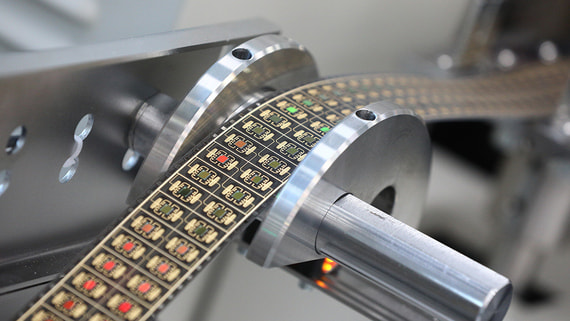
The Russian Ministry of Industry and Trade has announced a significant investment of 1.4 billion rubles (approximately $15 million) for the development of specialized equipment essential for domestic microelectronics production. The funding will specifically target the creation of liquid etching installations, a critical piece of machinery required for mass production of semiconductor chips. This investment represents another step in Russia’s broader strategy to achieve technological sovereignty in the strategically important semiconductor sector.
Strategic Importance of Liquid Etching Technology
Liquid etching equipment plays a fundamental role in the semiconductor manufacturing process. This technology uses chemical solutions to precisely remove layers of material from silicon wafers, creating the intricate patterns that form the foundation of integrated circuits. Without reliable access to such equipment, achieving high-volume chip production remains virtually impossible. The process requires extreme precision, as modern microchips contain billions of transistors, each smaller than a human hair. The liquid etching phase is particularly crucial for creating the microscopic channels and pathways that allow electrical signals to flow through the chip.
The development of indigenous liquid etching systems has become increasingly urgent for Russia following the imposition of Western sanctions, which have severely restricted access to foreign semiconductor manufacturing equipment. Major equipment suppliers from the Netherlands, Japan, and the United States have ceased exports to Russia, creating a significant gap in the country’s technological capabilities. Companies like ASML, Applied Materials, and Tokyo Electron, which dominate the global market for chip-making machinery, have all complied with export restrictions, leaving Russian manufacturers scrambling for alternatives.
Russia’s Push for Semiconductor Independence
This latest investment is part of a comprehensive national program aimed at rebuilding Russia’s microelectronics industry. The country has historically depended heavily on imported semiconductors and manufacturing equipment, a vulnerability that has become particularly acute since 2022. Government officials have repeatedly emphasized the need to establish complete domestic supply chains for critical electronic components. The Ministry of Industry and Trade has identified semiconductor production as a national priority, allocating billions of rubles across various projects designed to reduce foreign dependence.
Russian authorities have set ambitious targets for domestic chip production, though industry experts acknowledge the significant challenges involved. Building a competitive semiconductor industry requires not just equipment, but also highly specialized materials, advanced design software, and a workforce with decades of accumulated expertise. The Soviet Union once maintained a robust electronics industry, but much of this capability eroded during the economic turbulence of the 1990s. Rebuilding this infrastructure will require sustained investment over many years, with some analysts estimating that achieving true self-sufficiency could take a decade or more.
Technical Challenges and Future Outlook
The development of liquid etching equipment presents substantial technical challenges. Modern semiconductor manufacturing requires equipment capable of operating with nanometer-level precision while maintaining consistent results across thousands of wafers. Russian engineers and scientists face the task of developing systems that can match the performance of established foreign suppliers, a goal that requires both significant research and development investment and extensive testing. The 1.4 billion ruble allocation represents initial funding, with additional resources likely needed as development progresses through various stages from prototype to mass production.
Industry observers note that Russia’s efforts to develop domestic semiconductor equipment mirror similar initiatives in other countries seeking to reduce dependence on established suppliers. China, for instance, has invested hundreds of billions of dollars in its semiconductor industry, while the United States and European Union have launched their own programs to boost domestic chip production. The global semiconductor equipment market, valued at over $100 billion annually, has become increasingly strategic as nations recognize the critical role chips play in everything from consumer electronics to military systems and artificial intelligence applications.
Expert Opinion: While the 1.4 billion ruble investment demonstrates Russia’s commitment to semiconductor independence, achieving competitive mass production capabilities will require sustained funding over multiple years and significant technical breakthroughs. The most realistic near-term outcome is the development of equipment suitable for producing legacy node chips for domestic industrial and military applications, rather than cutting-edge processors that compete with global leaders. Success in this initiative could, however, provide a foundation for more advanced developments in the future and reduce Russia’s vulnerability to supply chain disruptions.