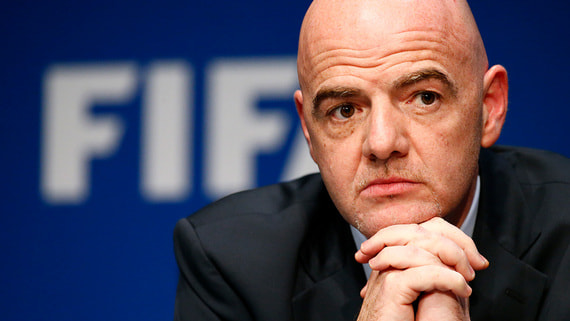
As Gianni Infantino marks his tenth anniversary as president of the International Federation of Football (FIFA), his tenure stands at a critical crossroads. What began as a promise to clean up world football’s governing body after unprecedented corruption scandals has evolved into a controversial reign marked by ambitious expansion, geopolitical maneuvering, and most recently, a decision that may ultimately cost him his position. The Swiss-Italian administrator’s willingness to accommodate former U.S. President Donald Trump could prove to be the concession that ends his career at the pinnacle of global football governance.
Infantino ascended to FIFA’s presidency in February 2016, emerging from the shadow of his disgraced predecessor Sepp Blatter, who had led the organization for 17 years before being banned from football-related activities amid widespread corruption investigations. The FBI’s intervention into FIFA’s affairs in 2015, which resulted in the arrest of multiple high-ranking officials and exposed decades of bribery and kickbacks, created the perfect storm for an outsider to promise reform. As UEFA’s general secretary at the time, Infantino positioned himself as the candidate of change, pledging transparency, accountability, and a new era for the beautiful game.
The Expansion Era: Transforming World Football
Throughout his decade in charge, Infantino has fundamentally reshaped the landscape of international football competitions. His most significant achievement has been the expansion of the FIFA World Cup from 32 to 48 teams, a change that will take effect at the 2026 tournament jointly hosted by the United States, Canada, and Mexico. Proponents argue this expansion democratizes football by giving smaller nations a realistic path to the world’s biggest sporting stage. Critics, however, contend that it dilutes the quality of competition and is primarily motivated by commercial interests, with more matches generating substantially more revenue from broadcasting rights and sponsorships.
The controversial 2022 World Cup in Qatar represented perhaps the most defining moment of Infantino’s presidency, though the hosting decision predated his tenure. His unwavering support for the Gulf state despite widespread criticism over human rights concerns, treatment of migrant workers, and the tournament’s unprecedented winter scheduling drew fierce condemnation from human rights organizations and fan groups worldwide. In a remarkable pre-tournament press conference, Infantino delivered an impassioned and widely criticized speech declaring “I feel Qatari, I feel Arab, I feel African, I feel gay, I feel disabled, I feel like a migrant worker,” a statement that was met with bewilderment and accusations of tone-deafness.
Financial Growth Amid Governance Questions
Under Infantino’s leadership, FIFA’s financial position has strengthened considerably. The organization’s revenue has grown substantially, with the 2022 World Cup cycle generating record income exceeding $7.5 billion. This financial success has allowed FIFA to increase payments to member associations, funding grassroots development programs across all continents. Yet questions persist about governance and the concentration of power within the organization. Infantino has faced criticism for his management style, with some former colleagues describing an increasingly centralized decision-making process that sidelines dissenting voices.
The relationship between FIFA and various geopolitical forces has become increasingly complex during Infantino’s tenure. His close ties to leaders in Saudi Arabia, Qatar, and other Gulf states have raised eyebrows among football governance experts who worry about the sport becoming entangled in broader diplomatic machinations. The recent push to involve the United States more deeply in FIFA’s future plans, particularly as the country prepares to host the 2026 World Cup alongside its North American neighbors, has placed Infantino in delicate territory navigating between powerful political interests.
The Trump Factor: A Gamble Too Far?
The most immediate threat to Infantino’s continued presidency stems from his apparent willingness to accommodate demands from Donald Trump and American political interests. While specific details remain subject to ongoing negotiations and political pressures, FIFA insiders suggest that Infantino’s concessions have alienated key power brokers within the organization’s member associations, particularly in Europe and South America. These traditional football powerhouses have historically wielded significant influence within FIFA’s structures, and their patience with Infantino’s political maneuvering appears to be wearing thin.
As Infantino enters his second decade at FIFA’s helm, the path forward remains uncertain. His supporters point to genuine achievements in expanding football’s global reach, increasing revenues, and maintaining stability after the tumultuous Blatter years. His detractors see an administrator who has traded FIFA’s independence for political alliances and commercial gain. Whether he can navigate the current challenges while maintaining the support needed to continue as president will determine not only his legacy but also the future direction of the world’s most popular sport.
Expert Opinion: Infantino’s decade at FIFA represents a fundamental shift in how global sports governance intersects with geopolitics and commercial interests. His survival likely depends on whether European and South American federations view potential successors as viable alternatives or prefer a weakened but familiar incumbent. The 2026 World Cup will serve as the ultimate referendum on his presidency—its success could cement his legacy, while any significant failures would provide his critics the ammunition needed to force change at the top.