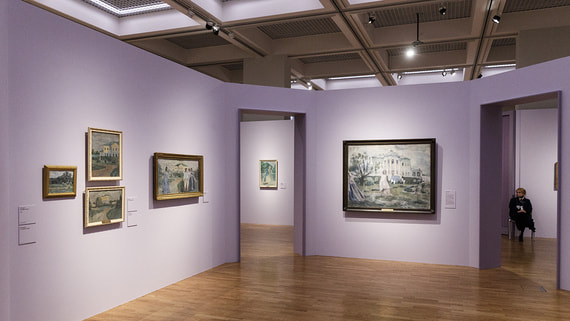
The State Tretyakov Gallery in Moscow is currently presenting a remarkable exhibition dedicated to the works of Viktor Borisov-Musatov, one of Russia’s most enigmatic and poetic painters of the late 19th and early 20th centuries. This comprehensive showcase brings together masterpieces that exemplify the artist’s distinctive style, characterized by dreamy landscapes, ethereal female figures, and a profound sense of nostalgia for a disappearing aristocratic world. The exhibition offers visitors a rare opportunity to immerse themselves in the melancholic beauty that defined Borisov-Musatov’s artistic vision and established him as a pivotal figure in Russian Symbolism.
The Life and Legacy of Viktor Borisov-Musatov
Viktor Elpidiforovich Borisov-Musatov (1870-1905) emerged as one of the most distinctive voices in Russian art during the tumultuous years leading up to the 1905 Revolution. Born in Saratov into a family of modest means, he overcame significant physical challenges throughout his life, having suffered a spinal injury as a child that left him with a hunched back. This physical condition, combined with his sensitive artistic temperament, may have contributed to the introspective and contemplative nature of his work. Despite his relatively short life—he died at just 35 years of age—Borisov-Musatov created a body of work that profoundly influenced the development of Russian art and inspired the formation of the Blue Rose group, a collective of Symbolist artists who continued his aesthetic legacy.
The artist received his formal training at prestigious institutions including the Moscow School of Painting, Sculpture and Architecture, the Imperial Academy of Arts in St. Petersburg, and later studied in Paris at Fernand Cormon’s studio. During his time in France, he absorbed the influences of Impressionism and Post-Impressionism, particularly the works of Pierre Puvis de Chavannes, whose decorative style and muted palette would leave an indelible mark on Borisov-Musatov’s mature paintings. Upon returning to Russia, he synthesized these Western influences with his own deeply personal vision, creating works that transcended mere representation to evoke emotional and spiritual states.
Themes of Memory and Disappearing Worlds
Central to Borisov-Musatov’s artistic output is the theme of vanishing worlds—specifically, the declining Russian aristocratic estate culture that was rapidly disappearing in the face of modernization and social upheaval. His paintings frequently depict crumbling manor houses, overgrown gardens, and women in anachronistic 18th-century dress wandering through these nostalgic settings. Works such as “The Pool” (1902), “Ghosts” (1903), and “The Emerald Necklace” (1903-1904) exemplify this preoccupation with a lost world of refinement and beauty. The artist often used his sister Elena and his future wife Elena Alexandrova as models, lending his compositions an intimate, personal quality that heightens their emotional resonance.
The Tretyakov Gallery exhibition thoughtfully contextualizes these works within the broader artistic movements of the era. Visitors can observe how Borisov-Musatov’s tempera technique, with its matte finish and subtle color harmonies of blues, greens, and silvery grays, creates an almost tapestry-like quality that distances the viewer from reality. This deliberate aesthetic choice reinforces the dreamlike atmosphere that pervades his canvases, inviting contemplation rather than immediate comprehension. Art historians have noted that his work represents a unique bridge between 19th-century Romanticism and 20th-century modernist experimentation, making him an essential figure for understanding Russian art history.
Significance for Contemporary Audiences
For contemporary viewers, the exhibition offers more than historical interest—it provides a meditation on themes of memory, loss, and the passage of time that remain universally relevant. In an era of rapid technological change and social transformation, Borisov-Musatov’s elegiac vision speaks to enduring human concerns about preserving beauty and meaning in the face of inevitable change. The Tretyakov Gallery’s presentation allows audiences to engage with these profound questions while appreciating the technical mastery and aesthetic innovation that distinguish Borisov-Musatov’s contribution to world art. The exhibition stands as a testament to the gallery’s ongoing commitment to showcasing the full breadth of Russian artistic achievement and ensuring that important yet sometimes overlooked masters receive the recognition they deserve.
Expert Opinion: This exhibition arrives at a particularly resonant moment, as contemporary audiences increasingly seek art that offers contemplation and emotional depth rather than mere spectacle. Borisov-Musatov’s work, with its meditation on cultural memory and elegant decline, may find unexpected relevance among viewers navigating their own anxieties about societal transformation. The Tretyakov Gallery’s decision to spotlight this underappreciated master suggests a broader curatorial trend toward recovering artists who bridge national traditions with international movements.