Choice and Consequence in RPGs: Dialogue Trees, Reputation and Branching Stories
How RPGs make your choices count: dialogue trees, skill checks, morality meters, faction reputation and the tricks developers use to keep branching under control.
“Your choices matter” may be the most common promise in RPG marketing, and the hardest to keep. Every real branch is content that some players will never see, and every consequence has to be written, voiced, tested and tracked for the rest of the game. So developers have a set of tools for making choice feel meaningful without the story splitting into a thousand separate versions.
This guide looks at those tools: dialogue trees and wheels, skill and stat checks, morality meters, faction reputation, real branches versus flavor choices, and the design tricks that make it all workable. Along the way it uses well-known examples from Mass Effect, Fallout: New Vegas, The Witcher 2 and Disco Elysium.
Dialogue Trees: The Basic Building Block
Almost every choice system starts with a dialogue tree. A conversation is a set of nodes. The game shows a line, offers a list of responses, and each response leads to another node. Some branches end the conversation, some loop back so you can ask more questions, and some set a hidden flag, such as “the player lied to this character” or “the player agreed to help.”
That flag is where consequences come from. A tree on its own is just a menu. What makes it a choice system is that later scenes check those flags. If a character remembers you lied an hour ago, or a quest goes differently because you agreed to help, the dialogue choice has become a narrative choice.
Lists versus wheels
Classic CRPGs show full written responses, so you know exactly what your character will say. BioWare’s Mass Effect (2007) made the dialogue wheel popular. It is a radial menu of short paraphrases built for a fully voiced main character. Its layout carries meaning. Options on the left usually dig deeper into a topic, options on the right move the conversation forward, the top options lean polite or selfless, and the bottom ones lean aggressive. The wheel made conversations faster and more cinematic. The trade-off is that a short paraphrase sometimes turns into a line the player didn’t expect. Our Mass Effect series history covers how the trilogy built on it.
Skill Checks: When Your Build Talks
A skill check ties dialogue to your character’s stats. Some options only appear, or only succeed, if a skill or attribute is high enough. Fallout: New Vegas (2010) uses fixed thresholds. For example, it might need a certain Barter value to talk a shopkeeper into a discount, or high Intelligence to impress someone. You either meet the requirement or you don’t, and the game shows it in the option text.
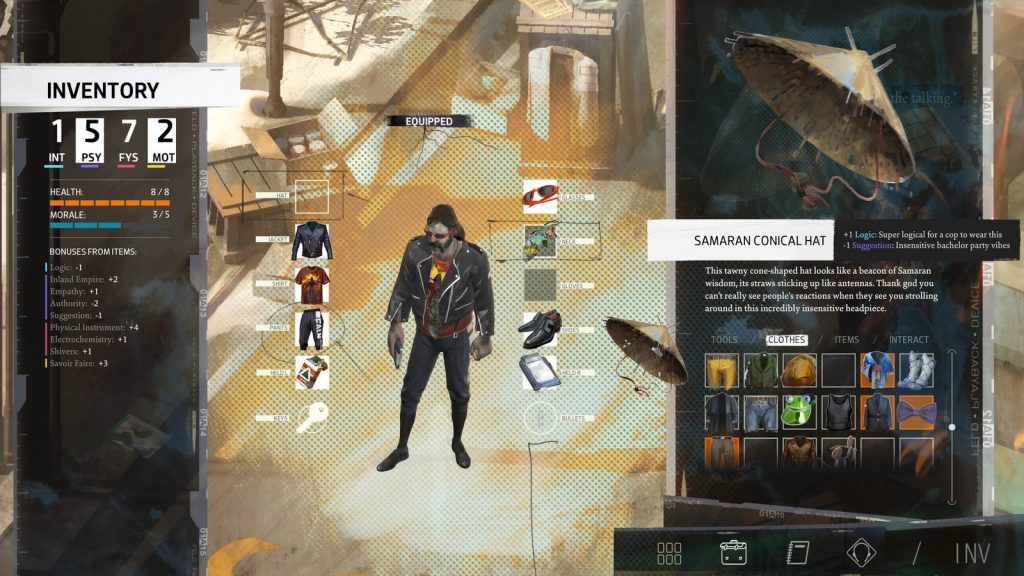
Other games add dice. Tabletop-inspired RPGs roll against a difficulty, so a skilled character can still fail and a weak one can get lucky. Disco Elysium (2019) built a whole game on this. It has no traditional combat. Its 24 skills, grouped under four attributes, are rolled with two six-sided dice, and each skill also talks to you as a voice in your head, offering ideas, warnings and bad advice. Investing in a skill changes both what you can do and who your character is.
Skill checks are probably the most satisfying form of choice because they connect role-playing to building a character. A charismatic diplomat and a brute-force fighter take different routes through the same quest because of the character you built, not because of a single button press.
Common mistakes with skill-check builds
- Spreading points too thin. Many games set checks high enough that a character who is average at everything passes few of them.
- Ignoring temporary boosts. Equipment, consumables and companions often raise a skill just enough to pass a check.
- Reloading every failed roll. You can, but some of the best-written scenes in dice-based games are the failures.
Morality Meters: Paragon, Renegade and Karma
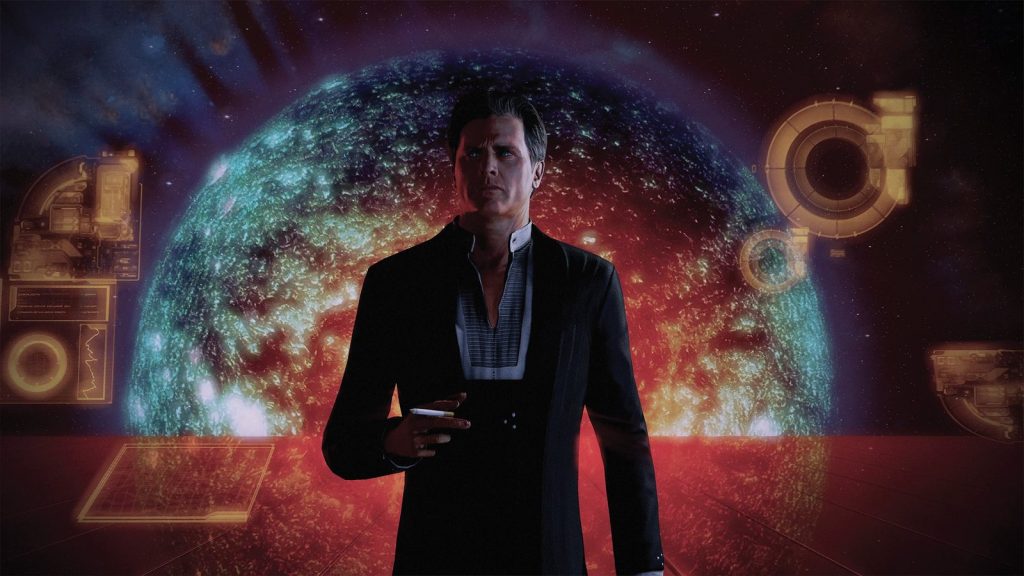
A morality system tracks the overall tone of your choices. Mass Effect awards Paragon points for compassionate, by-the-book choices and Renegade points for ruthless, pragmatic ones. Those points then unlock special dialogue options through the charm and intimidate talents, so a strongly Paragon or Renegade Shepard can settle some conflicts that other players would have to fight through. Other games use a single karma-style score running from good to evil that changes how some characters react to you.
Morality meters are easy to understand and give quick feedback. Their main weakness is that they encourage players to “pick a lane.” If the strongest options need a high score on one side, players stick to one side even when their character would act differently. That flattens the moral ambiguity good writing aims for. Many later games dropped single good-and-evil meters, or made them less visible, for this reason.
Faction Reputation: Fallout: New Vegas as the Model
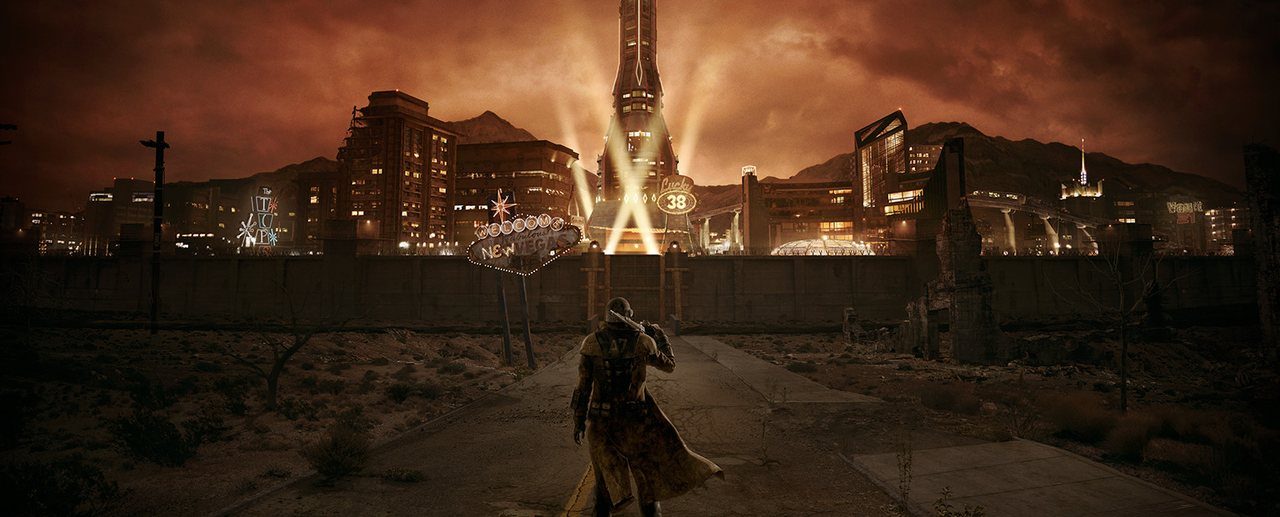
Rather than asking whether you are good or evil, a reputation system asks what each group thinks of you. Fallout: New Vegas, developed by Obsidian and directed by Josh Sawyer, is the best-known example. Its Mojave Wasteland is fought over by the New California Republic, Caesar’s Legion and the reclusive Mr. House, plus smaller groups such as the Boomers, Great Khans, Powder Gangers, Brotherhood of Steel and Followers of the Apocalypse.
Your standing with each faction changes based on what you do for or against it:
- Helping a faction can earn you rewards such as armor, or access to places like a hidden base.
- Angering a faction can lead it to send assassins after you.
- Factions dislike each other, so working for one can close off quests from another.
- Companions can leave if you get too close to a faction they hate.
It all comes together at the Battle of Hoover Dam, where the ending depends on which side you back: the NCR, the Legion, Mr. House, or an independent New Vegas with the help of the robot Yes Man. Sawyer has said he wanted to avoid choices that are plainly good or evil, so each faction has real problems and real appeal. Our Fallout series history explains how New Vegas fits into the franchise.
Reputation systems scale better than morality meters because they model relationships, not a single number. They also lead to more interesting dilemmas. Helping a sympathetic group may still turn its allies against you.
Real Branches versus Flavor Choices
Not every choice changes the story’s direction, and that is fine. It helps to know the difference.
| Type | What it changes | Example pattern |
|---|---|---|
| Flavor | Tone, a line of dialogue, how you see your character | Choosing a sarcastic or sincere reply |
| Local consequence | The outcome of one quest or one character’s fate | Sparing or killing a quest target |
| Delayed consequence | A scene hours later, or in a sequel | A spared character returning to help or betray you |
| Structural branch | Whole areas, chapters or the ending | Siding with one faction changes the next act |
The best-known structural branch in the genre is in The Witcher 2: Assassins of Kings (2011). At the end of Chapter 1, Geralt sides with either the Temerian commander Vernon Roche or the elven rebel Iorveth. Chapter 2 then plays out from opposite sides of the same conflict around the town of Vergen, with different quests, allies and events. Both paths come back together for Chapter 3. CD Projekt Red described the result as many different “states of the world” by the end, not as entirely separate endings.
Flavor choices aren’t fake choices. They are how you role-play. A game made only of structural branches would be impossible to build. A game with only flavor choices feels empty when you replay it. Most good RPGs mix all four types.
How Developers Keep Branching Under Control
If every decision doubled the amount of content, a ten-choice game would need over a thousand versions. In practice, studios use a few well-known techniques.
- Branch and bottleneck. Paths split and rejoin at key story points, as in The Witcher 2’s Chapter 3. Players get real divergence without endless forks.
- State tracking and reactivity. Rather than branching the plot, the game remembers flags and changes small things: a greeting, a cameo, an extra option. A large number of small reactions can feel bigger than one big branch.
- Delayed payoff. A consequence that shows up hours later feels more real than one that comes right away, and it costs no more to make.
- Ending slides. The Fallout tradition sums up the fate of each town and faction at the end. This lets the game honor dozens of choices without building a playable epilogue for each one.
- Save imports and world states. Mass Effect 2 could import a finished save from the first game, and Dragon Age built a web tool, the Dragon Age Keep, so players could set the world state from earlier games. See our Dragon Age history for how that worked across four games.
Every approach has a cost. Imports and world states make sequels harder to write, because the studio has to support every combination of past decisions. That’s why carried-over choices often end up as cameos, letters or lines of dialogue rather than major plot changes. Players often notice this, and it is a common reason for disappointment with sequels.
What Makes a Choice Feel Meaningful?
Across very different games, choices tend to feel meaningful when:
- It costs something. Picking one option closes off another: a companion, a reward, a faction’s trust.
- It is informed but uncertain. You understand what is at stake, but you can’t be sure how it will turn out.
- The game acknowledges it. Even a small sign later on, like a line of dialogue, a changed location or an ending slide, proves the game noticed.
- It matches your character. The best choices feel like expressing who your character is, not solving a puzzle for the best reward.
On the other side, choices feel hollow when every option leads to the same scene right away, when the “right” answer is obvious from the rewards, or when a morality meter makes you play against your character to unlock its best options.
Tips for Getting the Most From Choice-Driven RPGs
- Play your first run without reloading. You’ll only find out how reactive a game is if you live with your choices.
- Don’t chase the “best” ending on a first playthrough. Many games are designed so that imperfect outcomes are the more interesting ones.
- Use separate saves at major decisions. If you plan to replay, a save before each big branch lets you try the other path without starting over.
- Talk to companions often. In party-based RPGs, they are usually where the game reacts most visibly to what you do.
- Read the stat requirements. In skill-check games, your build is your voice. Decide early what kind of talker you want to be.