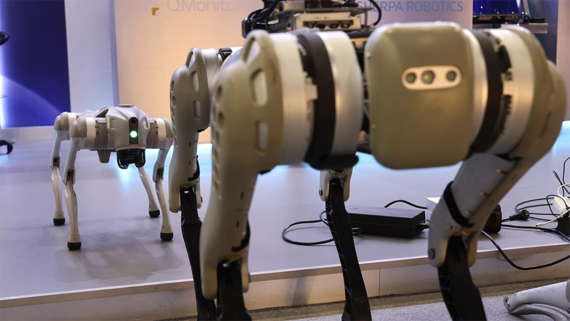
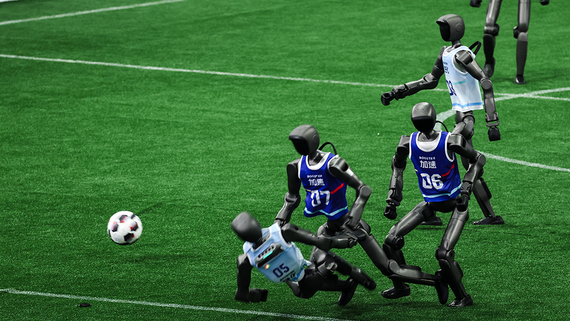
The inaugural World Humanoid Games have concluded with a spectacular display of technological prowess, unexpected failures, and moments that reminded spectators just how far artificial beings have come — and how far they still have to go. This unprecedented Olympic-style competition for humanoid robots brought together cutting-edge machines from research laboratories and tech companies worldwide, creating a spectacle that blended athletic competition with a glimpse into humanity’s technological future. The event attracted thousands of spectators and millions of online viewers eager to witness robots competing in tasks that challenge even the most advanced artificial systems.
The competition featured robots attempting various physical challenges designed to test their agility, balance, coordination, and problem-solving abilities. Events ranged from sprinting and obstacle courses to more nuanced tasks requiring fine motor control and real-time decision-making. While some robots performed flawlessly, executing movements with precision that seemed almost human, others provided unintentional entertainment as they stumbled, fell, or simply froze in confusion. These failures, rather than diminishing the event, highlighted the genuine difficulty of replicating human movement and the remarkable complexity of our own biological systems.
Breaking Records and Breaking Down
Several participating robots set new benchmarks for humanoid performance during the games. Speed records were shattered in bipedal locomotion events, with leading robots achieving velocities that would have seemed impossible just a few years ago. The progress represents decades of research in artificial intelligence, materials science, and mechanical engineering. Boston Dynamics, Tesla, Agility Robotics, and numerous university research teams have invested billions of dollars collectively in developing humanoid systems capable of navigating the human world. The games served as a public demonstration of these investments and a measuring stick for comparing different technological approaches.
However, the event was equally memorable for its mishaps. Robots tumbled during balance challenges, missed targets in throwing competitions, and occasionally wandered off course entirely. One highly anticipated competitor reportedly shut down mid-event due to overheating, while another became stuck in a loop, repeatedly attempting and failing the same simple step. Engineers and roboticists watching noted that these failures provide invaluable data for future improvements. Each stumble reveals limitations in current sensing technology, processing power, or mechanical design that researchers can address in subsequent iterations.
The Historical Context of Humanoid Development
The dream of creating human-like machines stretches back centuries, from ancient automata to the industrial robots of the twentieth century. Honda’s ASIMO, introduced in 2000, represented a watershed moment in humanoid robotics, demonstrating that machines could walk, climb stairs, and interact with humans in meaningful ways. Since then, progress has accelerated dramatically. Modern humanoid robots incorporate artificial intelligence systems capable of learning from experience, adapting to new situations, and even engaging in limited forms of reasoning. The World Humanoid Games represent both a celebration of this progress and a challenge to push development even further.
Industry experts suggest these competitions serve purposes beyond entertainment. They establish standardized benchmarks for comparing different robotic systems, encourage innovation through friendly competition, and help identify real-world applications for humanoid technology. As robots become more capable, potential uses expand from manufacturing and logistics to healthcare, domestic assistance, and disaster response. The games provide a proving ground where these possibilities can be explored safely and publicly, building public familiarity with technology that may soon become commonplace.
Looking Toward the Future
The success of the inaugural World Humanoid Games virtually guarantees future editions, with organizers already discussing expanded categories and more challenging events. As artificial intelligence and robotics continue advancing at remarkable rates, each subsequent competition will likely showcase capabilities that seem impossible today. The robots competing in these games may eventually serve alongside humans in workplaces, homes, and emergency situations worldwide. For now, they provide both inspiration and entertainment, reminding us that the future of human-machine collaboration is being written one stumbling step at a time.
Expert Opinion: The World Humanoid Games marks a pivotal moment in robotics development, establishing competitive benchmarks that will accelerate innovation across the industry. Within the next decade, we can expect humanoid robots to achieve human-level locomotion and manipulation capabilities, fundamentally transforming sectors from elder care to construction. The publicized failures are equally important as successes, as they direct research priorities and demonstrate the authentic challenges that remain in creating truly versatile humanoid systems.